
Transcript Ezra Klein Interviews Salam Fayyad
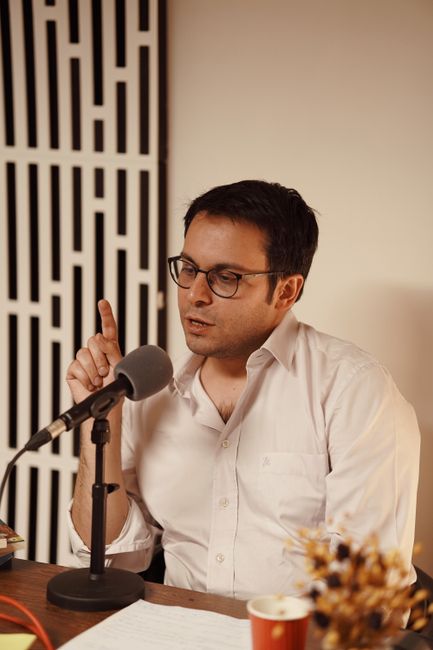
Ezra Klein Interviews Salam Fayyad: A Deep Dive into Palestinian Governance and the Two-State Solution
In a recent, in-depth interview with Ezra Klein, former Palestinian Prime Minister Salam Fayyad offered a compelling and nuanced perspective on the complexities of Palestinian governance, the viability of the two-state solution, and the challenges hindering progress towards peace. Fayyad, known for his technocratic approach and his efforts to build Palestinian state institutions during his premiership, provided insights that resonated with the urgency of the Palestinian question and the need for pragmatic solutions. The conversation, rich with historical context and contemporary analysis, illuminated the deep-seated obstacles to statehood and offered a roadmap for potential avenues forward, even amidst a landscape of entrenched conflict and political stalemate.
Fayyad began by articulating his foundational belief in the necessity of robust, accountable state institutions as the bedrock of any future Palestinian state. He emphasized that genuine statehood is not merely about territorial claims but about the capacity of a government to effectively serve its population, uphold the rule of law, and provide essential services. This perspective, honed during his tenure as Prime Minister from 2007 to 2013, underscores his consistent advocacy for good governance, fiscal responsibility, and institutional development. He detailed the significant strides made during his leadership in establishing a functioning civil service, a credible security apparatus, and a more transparent financial system, all intended to demonstrate the Palestinian capacity for self-governance to both its own people and the international community. The goal, Fayyad explained, was to lay the groundwork for a viable, independent Palestinian state that could stand on its own, independent of external dependencies, and capable of negotiating from a position of strength and legitimacy.
The conversation inevitably turned to the enduring debate surrounding the two-state solution. Fayyad reiterated his long-held conviction that, despite its considerable challenges and the erosion of its feasibility over time, the two-state solution remains the most viable framework for resolving the Israeli-Palestinian conflict. He acknowledged the mounting skepticism, both within Palestinian society and internationally, about its attainability given the continued expansion of Israeli settlements, the fragmentation of Palestinian territory, and the persistent political deadlock. However, he argued that the alternatives – a one-state solution with unequal rights or a perpetual state of conflict – are far more perilous and less likely to lead to a just and lasting peace. Fayyad stressed that a successful two-state solution would necessitate significant compromises from both sides, including a withdrawal of Israeli forces from occupied territories, the establishment of a Palestinian state with agreed-upon borders, and a resolution to the refugee question. He also highlighted the crucial role of the international community in facilitating and guaranteeing such an agreement, emphasizing that the onus cannot solely rest on the shoulders of the two parties.
A significant portion of the interview was dedicated to the internal Palestinian political landscape, particularly the deep divisions between Fatah and Hamas. Fayyad offered a candid assessment of how this division has severely undermined Palestinian aspirations for statehood and weakened their negotiating position. He described the Palestinian Authority in the West Bank as struggling with a legitimacy crisis, exacerbated by the lack of democratic elections and the perceived inability to deliver tangible progress on the ground. Conversely, he pointed to Hamas’s governance in Gaza as facing its own set of challenges, including economic hardship and international isolation. Fayyad’s perspective was that reconciliation between the two factions was not merely a political nicety but a strategic imperative. He argued that a unified Palestinian leadership, committed to democratic principles and a unified national vision, would be essential to presenting a coherent and credible front in any future negotiations with Israel. He expressed his disappointment that despite numerous attempts, Palestinian unity had remained elusive, a testament to the deep ideological and political chasm that exists.
The issue of Israeli settlements was a recurring theme, with Fayyad unequivocally stating that their continued expansion poses the most significant obstacle to the realization of a contiguous and viable Palestinian state. He detailed how settlements not only fragment Palestinian territory but also undermine the economic and social fabric of Palestinian life. Fayyad underscored that any future peace agreement would require a significant dismantling or reconfiguring of settlements, a proposition that has historically faced immense political resistance within Israel. He articulated the pragmatic difficulties this presents for any diplomatic effort, noting that the sheer scale and entrenched nature of the settlement enterprise have transformed the physical geography of the West Bank in ways that make a clear separation increasingly challenging. He also touched upon the legal implications, citing international law that deems settlements illegal.
Fayyad also provided a critical analysis of the role of international aid and its impact on Palestinian development. While acknowledging its importance in alleviating immediate suffering and supporting institutional building, he cautioned against the potential for aid dependency. He argued that sustainable development and genuine statehood require fostering a self-sufficient Palestinian economy, one that is not solely reliant on external financial support. This involves creating an environment conducive to investment, promoting local entrepreneurship, and ensuring fair trade practices. He expressed concern that the ongoing political impasse had led to a situation where aid was often used as a substitute for political solutions, thus perpetuating a cycle of dependency rather than fostering genuine self-determination.
Regarding the future, Fayyad offered a somber but pragmatic outlook. He acknowledged the fatigue and disillusionment that have set in among Palestinians and the international community alike. However, he refused to succumb to despair. He reiterated the importance of continued efforts to strengthen Palestinian institutions, promote democratic governance, and foster a unified national vision. He also stressed the need for a renewed international commitment to finding a just and lasting solution, one that addresses the core issues of the conflict, including borders, refugees, and security. Fayyad’s overarching message was one of persistent engagement, emphasizing that even in the face of overwhelming odds, the pursuit of peace and self-determination must continue. He implied that the long-term strategy must involve not just diplomatic pronouncements but concrete actions that build the foundations for a future Palestinian state, regardless of the immediate political climate. His perspective offered a rare blend of idealism grounded in pragmatism, a testament to his enduring commitment to the Palestinian cause and his belief in the power of diligent, institutional effort.
