
James Turrell Art Friends Seminary
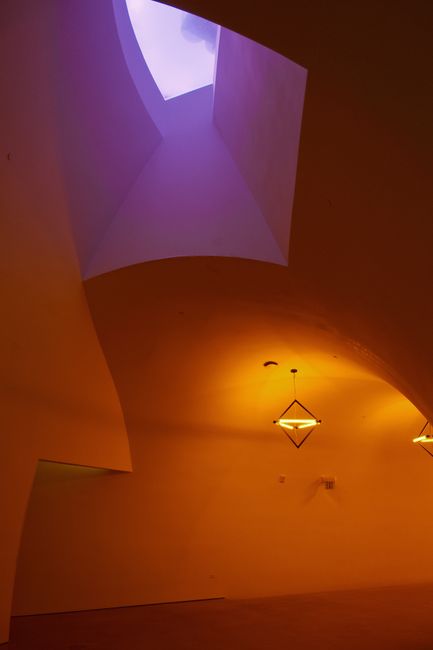
James Turrell’s Art at Friends Seminary: A Nexus of Light, Education, and Contemplation
The presence of James Turrell’s influential light art within the walls of Friends Seminary, a Quaker institution located in New York City, represents a singular and profound convergence of artistic vision, educational philosophy, and architectural integration. Turrell, globally recognized for his groundbreaking work that explores the perception of light and space, has created installations that are not merely decorative but are fundamental to the experience of the environment they inhabit. At Friends Seminary, this translates into a unique pedagogical tool and a sanctuary for contemplation, deeply embedded within the daily life of the school community. The specific works, often integrated into existing architecture or designed as dedicated spaces, challenge students and faculty alike to engage with light in an unprecedented manner, moving beyond its utilitarian function to understand its profound impact on human perception and consciousness. This integration is not accidental; it aligns directly with Quaker values of introspection, experiential learning, and the pursuit of inner light. The art becomes a living curriculum, fostering a unique educational environment that prioritizes sensory experience and thoughtful engagement.
The genesis of Turrell’s engagement with Friends Seminary can be traced back to a shared commitment to fostering an environment that encourages deep thinking and self-discovery. Quaker education has long emphasized the importance of silence, reflection, and the "inner light" – the belief that a divine spark resides within each individual, accessible through quiet contemplation. Turrell’s art, which manipulates ambient and artificial light to create immersive environments that alter our perception of space and color, offers a powerful, tangible manifestation of these abstract spiritual and philosophical concepts. His works are not about objects to be observed from a distance, but rather about experiences to be inhabited. Visitors, or in this case, students and faculty, become active participants, their senses stimulated and their understanding of space and form reconfigured. This experiential approach resonates deeply with the Quaker educational ethos, which prioritizes learning by doing and direct personal experience over rote memorization or purely intellectual understanding. The school’s administration recognized the potential for Turrell’s art to serve as a constant, subtle, yet potent reminder of these core values, enriching the academic and spiritual lives of its community members.
One of the most prominent examples of Turrell’s work at Friends Seminary is often described as an "installation" rather than a discrete artwork, suggesting its seamless integration into the fabric of the school. This might involve specially designed rooms or architectural modifications that utilize controlled lighting to evoke specific perceptual states. These spaces are not meant to be passively viewed but actively entered and experienced. Upon entering, individuals are often met with a diffused, often monochromatic light that saturates the space. This deliberate reduction of visual stimuli forces the viewer to become acutely aware of the light itself, its color, its intensity, and its relationship to the architectural boundaries. The absence of traditional artworks, such as paintings or sculptures, redirects attention from external representations to the internal experience of perception. This practice is central to Turrell’s oeuvre, where the subject matter is not an object but the act of seeing itself. At Friends Seminary, these light spaces become zones of sensory recalibration, offering respite from the visual cacophony of the outside world and providing a unique environment for focused thought or quiet meditation. The psychological impact of such environments is significant, promoting a sense of calm, introspection, and heightened awareness.
The educational applications of Turrell’s art at Friends Seminary are multifaceted and extend far beyond mere aesthetic appreciation. The installations serve as living laboratories for exploring fundamental concepts in physics, optics, color theory, and psychology. Students can learn about the additive and subtractive properties of light, the way our eyes perceive color under different conditions, and the psychological effects of varying light intensities and hues. For instance, a science class might visit one of Turrell’s light rooms to conduct experiments on visual adaptation or to observe phenomena such as afterimages. Art classes can delve into the principles of composition and spatial illusion as manifested through light, while philosophy and religious studies classes can engage with the deeper implications of Turrell’s exploration of perception, consciousness, and the "inner light." The art acts as a catalyst for interdisciplinary learning, blurring the lines between subjects and fostering a more holistic understanding of the world. This experiential approach to education can be particularly impactful for students who learn best through direct engagement and sensory input, offering them a unique pathway to understanding complex ideas.
Beyond the immediate academic benefits, Turrell’s art at Friends Seminary cultivates a deeper sense of mindfulness and presence. In a society often characterized by constant distraction and rapid-paced living, these light-filled spaces offer a sanctuary for slowing down, observing, and reflecting. The act of entering a Turrell installation can be a deeply meditative experience, encouraging a heightened awareness of one’s own sensory apparatus and the subtle ways in which light shapes our reality. This aligns with the Quaker emphasis on the importance of "centering down" and finding stillness amidst external activity. The students and faculty at Friends Seminary are afforded a rare opportunity to engage with art that doesn’t demand interpretation or intellectual dissection but rather invites a direct, embodied experience. This fosters a unique capacity for observation and encourages a more profound appreciation for the sensory world, a skill that is increasingly valuable in an age of digital saturation. The quietude and sensory focus of these spaces can help to reduce stress and promote a sense of well-being, contributing to a more balanced and enriching educational experience.
The integration of James Turrell’s art at Friends Seminary also speaks to a broader trend in contemporary art and design, where the boundaries between art, architecture, and experience are increasingly blurred. Turrell’s work is often referred to as "environmental art" or "perceptual art" because it fundamentally alters the viewer’s relationship with their surroundings. By treating light as a medium and space as his canvas, he creates environments that are simultaneously beautiful and intellectually stimulating. The choice of Friends Seminary as a site for such installations is particularly resonant, as it underscores the school’s commitment to fostering an environment that nurtures not only intellectual growth but also personal and spiritual development. The art becomes an integral part of the learning environment, a constant presence that shapes the atmosphere and influences the daily lives of those within its walls. This holistic approach to education, where the physical and the conceptual are intertwined, is a hallmark of innovative pedagogical approaches and reflects a forward-thinking vision for the future of learning.
The long-term impact of having such profound artistic experiences embedded within the educational journey of young people cannot be overstated. Students who grow up with regular exposure to Turrell’s work at Friends Seminary are likely to develop a heightened sensitivity to light, space, and perception, a unique understanding of the power of sensory experience, and a capacity for introspection that can serve them throughout their lives. They learn to see the world differently, not just in terms of objects and forms, but in terms of the subtle interplay of light and shadow, the subjective nature of perception, and the profound impact of our environment on our inner state. This can foster a more critical and engaged citizenry, individuals who are more attuned to the nuances of their surroundings and more capable of thoughtful reflection. The art becomes a foundational element of their education, shaping their worldview and their capacity to engage with the complexities of life. The lasting legacy of this partnership is likely to extend far beyond the walls of the school, influencing how these individuals interact with art, space, and their own perception of reality.
Furthermore, the presence of James Turrell’s art at Friends Seminary serves as a powerful statement about the value of art in education and its potential to foster deeper understanding and personal growth. In a climate where arts funding is often precarious, this collaboration highlights the transformative power of integrating significant contemporary art into educational institutions. It demonstrates that art is not a luxury but a vital component of a well-rounded education, capable of enriching curricula, inspiring new ways of thinking, and fostering a more engaged and mindful community. The ongoing interaction with these light installations provides a continuous source of wonder and discovery for students and faculty, fostering a culture of curiosity and intellectual exploration. This unique environment contributes to Friends Seminary’s reputation as an institution that embraces innovative approaches to learning and prioritizes the holistic development of its students. The art becomes a tangible representation of the school’s commitment to creating a rich and stimulating environment that nurtures both the mind and the spirit.
