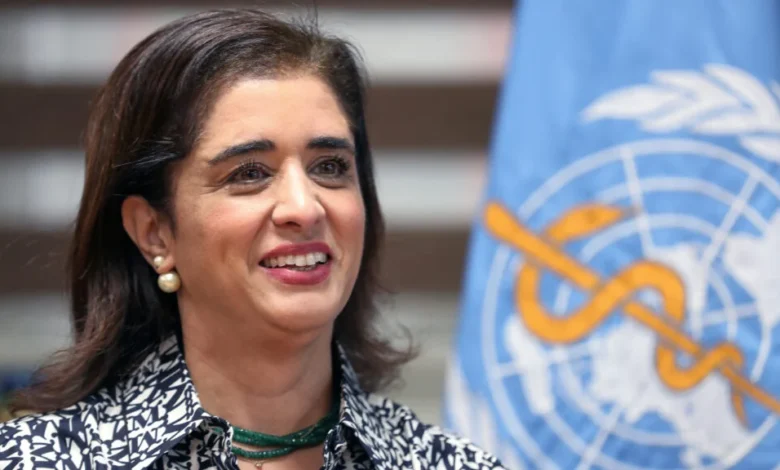
The weight of responsibility rests heavily on Dr. Hanan Balkhy’s shoulders, a burden amplified by the escalating geopolitical turmoil impacting her vast and complex region. As the recently appointed Director of the World Health Organization’s Eastern Mediterranean Region (EMRO), Dr. Balkhy finds herself at the epicenter of a health crisis exacerbated by a protracted conflict involving the United States, Israel, and Iran. This volatile environment, which threatens not only the immediate health and safety of millions but also the very fabric of healthcare systems, is a constant source of sleepless nights for the dedicated pediatrician.
Adding another layer of complexity to her already demanding role, Dr. Balkhy’s name is increasingly being circulated within global health circles as a potential contender for the next Director-General of the WHO. The second and final term of the current Director-General, Dr. Tedros Adhanom Ghebreyesus, is set to conclude in the summer of 2027. While the official process for selecting his successor will commence later this month or in May with Dr. Tedros’s call for nominations, the decision-making timeline presents a significant challenge for Dr. Balkhy. The nomination period is slated to close in September or October, leaving her with a finite window to deliberate on a candidacy that may necessitate an administrative leave from her critical leadership position in EMRO during an extraordinarily precarious period for her region.
In a candid interview with STAT, Dr. Balkhy offered insights into her considerations regarding a potential bid for the WHO’s top leadership role, the diplomatic complexities that candidates may face, particularly concerning the United States, and the profound challenges confronting EMRO due to the ongoing conflicts and their cascading effects.
A Distinguished Career in Global Health
Dr. Hanan Balkhy’s journey to her current influential position is marked by a robust academic and professional background. A native of Saudi Arabia, she earned her medical degree from King Abdulaziz University. Her postgraduate training in pediatrics was undertaken at the prestigious Massachusetts General Hospital, followed by a fellowship in pediatric infectious diseases at the Cleveland Clinic Foundation and Case Western Reserve University. Prior to her election as EMRO regional director in early 2024, Dr. Balkhy served for approximately five years as the WHO’s Assistant Director-General for Antimicrobial Resistance, a crucial role addressing a growing global health threat.
The interview, conducted prior to the recent announcement of a ceasefire, has been lightly edited for brevity and clarity, offering a glimpse into the multifaceted pressures and strategic considerations facing a key figure in global health.
Dual Citizenship and a Region in Turmoil
When asked about her background, Dr. Balkhy confirmed her Saudi nationality and her U.S. birth, clarifying that she holds dual citizenship. This personal connection to both regions underscores the intricate geopolitical landscape she navigates.
The Director-Generalship: A Difficult Decision Amidst Crisis
The impending selection process for the next WHO Director-General has naturally brought Dr. Balkhy into the spotlight. When pressed about her potential candidacy, she expressed a measured approach. “For me, running, I think at this point, it’s not 100% clear,” she stated. “I have such a very busy region, and I’m very focused on my current work.” This response highlights the immediate and overwhelming demands of her role in EMRO, where the health and well-being of millions are at stake.
There is a prevailing sentiment within some WHO circles that EMRO, which has yet to have a Director-General, may be due for this leadership position. While the role does not formally rotate by region, the unspoken acknowledgment of this demographic imbalance could exert pressure on Dr. Balkhy to enter the race. She acknowledged this historical context, noting that both EMRO and SEARO (WHO’s South-East Asia Regional Organization) are the two regions that have not held the Director-Generalship, describing it as "a bit of a gentleman’s agreement."
The precise timing of her decision remains fluid. “I think the latter, absolutely,” Dr. Balkhy responded when asked about a decision deadline, indicating that the ongoing complexities of her region will likely dictate the timeline. She further elaborated on the strategic advantage of excelling in her current role: “And then, in reality, I think any regional director, if we were to run, you can only make your candidacy better by just doing a good job in what you’re doing.” This pragmatic approach suggests that effective leadership in EMRO is her immediate priority, which would inherently bolster any future aspirations.
Navigating the Diplomatic Landscape: The U.S. Factor
Global health experts anticipate that candidates for the Director-General position will feel compelled to engage with U.S. administration officials, despite the U.S.’s withdrawal from the WHO and its lack of a formal vote in the selection process. This diplomatic dance could prove contentious, with other nations potentially viewing such overtures as an undue deference to Washington.
Dr. Balkhy acknowledged the undeniable influence of the United States in global public health. “Because of its talent, because of its science acumen, because of its scientists, the U.S. CDC, its NIH, its academia, the U.S. has been of extreme value to global public health in general,” she stated. She expressed regret over the U.S. stepping away from the organization, emphasizing the importance of inclusive participation. “Of course people need to be going to the U.S. and D.C. and Beijing. We have to go everywhere, and we have to keep our communications open all the time. We only lose if we don’t communicate.”
Her vision for the WHO is one of universal engagement: “We want the U.S. to come back. We want all of our member states to be at the table. Absolutely, yes. And I would bet a million dollars that every candidate will be doing it, whether they say it or not.” This perspective underscores her belief in the necessity of robust international cooperation and open dialogue for the advancement of global health.
Front-of-Mind Concerns: The Dire Implications for EMRO
The situation in Dr. Balkhy’s region is a source of immense concern, with ramifications that extend far beyond its borders. When asked about her most pressing worries, her response was stark. “What worries me at this specific moment is a further escalation into full-blown nuclear, biological, or chemical warfare. That’s what keeps me up at night.” This chilling prospect highlights the existential threats faced by the region and the potential for catastrophic humanitarian consequences.
Her team is actively working to bolster support for member states and maintain open lines of communication with other WHO regions. This is critical, as the current conflict involves 21 countries, with 16 or 17 falling within EMRO’s purview, and several others within the European region, including Israel.
A second critical concern revolves around the potential for attacks on desalination plants, which are vital for water security in the region. “This would be an utter disaster; 70% to 100% of the several countries in this region fully rely on desalination plants,” Dr. Balkhy explained. The destruction of these facilities would lead to severe shortages of potable water, impacting everything from drinking and cooking to agriculture.
The immediate aftermath of such an event would likely trigger mass migration, leading to immense humanitarian challenges. “So you’re talking about chaos, crowdedness, displaced populations,” she warned. The region already grapples with a significant displaced population, with 3.2 million in Iran and over a million in Lebanon. Across the region of 750 million people, one in every seven individuals is already in need of humanitarian assistance, a statistic that underscores the fragility of the existing support systems.
The logistical challenges of delivering aid have also been acutely felt. Dubai serves as a critical humanitarian hub for EMRO, through which millions of dollars worth of emergency kits and support are channeled. The closure of airspace in the region severely disrupted these supply chains, though efforts are underway to restore them. “It’s coming back, slowly,” Dr. Balkhy noted, acknowledging the resilience of the UAE government in working to ensure the continuity of flights and the establishment of alternative routes.
The closure of the Strait of Hormuz and the subsequent surge in energy costs further compound the regional crisis, exacerbating economic instability and impacting the cost of essential goods. “So that has been my life for the past month or so, thinking about all of these complexities,” she admitted, painting a vivid picture of the multifaceted challenges she confronts daily.
Shining a Light on Neglected Global Health Priorities
As the interview drew to a close, Dr. Balkhy emphasized the need for greater attention to long-term investments in global health infrastructure, even amidst immediate humanitarian responses. “I’m mindful, as a regional director of EMRO, of the discussions on the global health architecture and how that restructuring will deal with long-term issues as well as health emergencies,” she stated.
Her message is one of foresight and sustained commitment. “Things take time, and if we really want to build robust systems, we have to invest, even in the midst of a humanitarian response.” This underscores her belief that immediate crisis management must be complemented by strategic, long-term investments in resilient health systems to effectively address future challenges and ensure the well-being of populations across the globe. The complexities of her current role, coupled with the potential for a leadership bid at the highest level of global health, position Dr. Hanan Balkhy as a pivotal figure navigating a critical juncture for international health security.