Canada and Europe Forge Historic Media Alliance as CMPA and AQPM Join CEPI as International Observers

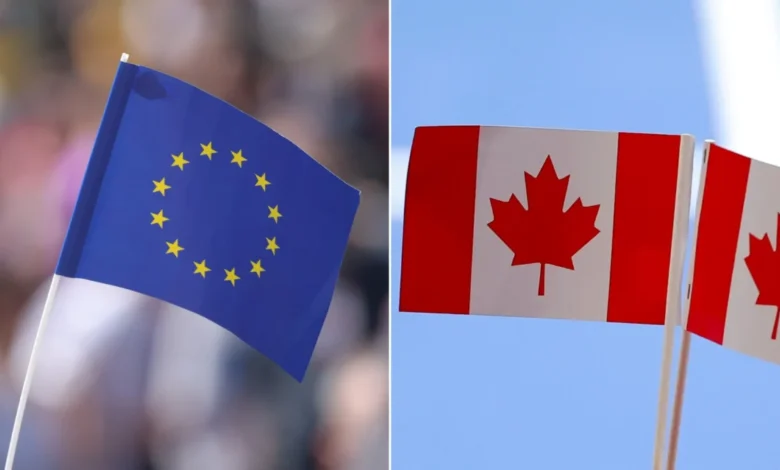
The geopolitical alignment between Canada and Europe over recent years has increasingly transcended traditional state diplomacy, rapidly expanding into the realms of cultural exchange, public broadcasting, and independent media production. This trans-Atlantic convergence reached a significant milestone when the European Audiovisual Production Association, widely known as CEPI, formally welcomed two of Canada’s most prominent media advocacy groups—the Canadian Media Producers Association (CMPA) and the Association Québécoise de la Production Médiatique (AQPM)—as its inaugural international observer members.
This strategic inclusion bridges the gap between European and North American independent creators at a critical juncture for the global entertainment industry. CEPI, which acts as the umbrella organization for 19 national associations alongside a broader European body, currently represents roughly 3,000 independent film and television production companies across 17 countries. By integrating the CMPA and AQPM into its extensive network, CEPI has effectively expanded its geographical footprint beyond European borders, creating a unified front designed to tackle the existential and operational hurdles currently plaguing content creators in the digital era.
The decision to formalize this relationship follows a steady intensification of institutional ties between Canada and European counterparts. Observers note that these bonds have tightened significantly through various geopolitical shifts, most notably during successive American administrations when Ottawa and European capitals found common cause in defending multilateral frameworks, cultural diversity, and robust regulatory models. This broader political alignment has cascaded directly into the media sector. Earlier this summer, Canada’s public broadcaster, CBC/Radio-Canada, made headlines by becoming the first non-European network to secure full membership in the European Broadcasting Union (EBU). Furthermore, plans are currently underway for Canada to participate in the upcoming Eurovision Song Contest, signaling a deepening cultural integration that mirrors the recent developments in independent production policy.
A Shared Agenda for Global Media Challenges
The newly established partnership between CEPI, the CMPA, and the AQPM is far more than a symbolic gesture of solidarity; it is designed as an operational alliance aimed at coordinating advocacy efforts on several legislative and economic fronts. Among the primary issues slated for collaborative dialogue are the regulatory frameworks governing multinational streaming services, the enforcement and expansion of domestic production requirements, the protection of intellectual property (IP) and creator rights, and the facilitation of international co-productions.
The urgency of this coordination was underscored last month during the Toronto International Film Festival (TIFF). At the high-profile festival, CEPI, the CMPA, the AQPM, and various other producer associations hailing from Australia and multiple European nations signed a joint declaration. This manifesto issued a direct call to governments worldwide, urging them to enact robust legislative measures to safeguard domestic audiovisual production and ensure the survival of local storytelling against the encroaching dominance of global tech platforms.
Industry leaders from both sides of the Atlantic have emphasized that independent producers are confronting remarkably parallel economic realities, despite being separated by an ocean. Anthony Muldoon, President of CEPI, highlighted the evolving nature of the audiovisual landscape in remarks following the announcement.
"The arrival of CMPA and AQPM as CEPI’s first international observer members reflects the increasingly international nature of the audiovisual industry," Muldoon stated. "While Europe and Canada may be an ocean apart, the challenges and opportunities facing our independent production sectors are remarkably similar. We share a commitment to supporting independent producers and creating original stories that reflect our respective cultural realities."
Echoing this sentiment, Reynolds Mastin, President and CEO of the CMPA, pointed to the urgent need for cross-border cooperation to address the modernization of legal and financial frameworks.
"Canadian and European independent producers face many of the same challenges, from modernizing regulations for the digital age to ensuring that local stories continue to be told, and to making sure domestic producers have a fair opportunity to own their work," Mastin remarked. "We are stronger when we tackle these challenges together."
Meanwhile, Hélène Messier, President and Executive Director at the AQPM, described the integration into CEPI as "a great privilege," while drawing attention to emerging technological and cultural threats that require a united international response. Messier specifically flagged the disruptive impacts of generative artificial intelligence (AI), the imperative to maintain diversity of cultural expression, and the ongoing struggle to preserve national cultural sovereignty in an increasingly homogenized global media market.
Background Context and Chronology of Trans-Atlantic Media Cooperation
The formalization of the partnership between CEPI and the Canadian production associations is the culmination of years of escalating dialogue and shared policy concerns. To understand the significance of this milestone, it is helpful to examine the timeline of events that have drawn Canada and Europe closer together within the creative sector:
- 2018–2020 (The Regulatory Shift): As global subscription video-on-demand (SVOD) services such as Netflix, Amazon Prime Video, and later Disney+ and Apple TV+ began dominating market share, both Canadian and European regulators recognized that legacy broadcasting acts were inadequate. Discussions began in earnest regarding the extension of regulatory oversight—including financial contributions and content quotas—to foreign streaming giants.
- 2023 (Legislative Milestones): Canada enacted the Online Streaming Act (Bill C-11), designed to modernize the Broadcasting Act and require streaming platforms to contribute to the creation and promotion of Canadian content. Concurrently, the European Union continued implementing and reviewing the Audiovisual Media Services Directive (AVMSD), which mandates European work quotas and prominence for European works on-demand services.
- September 2024 (The TIFF Joint Statement): During the Toronto International Film Festival, CEPI, the CMPA, AQPM, Australian producer bodies, and European counterparts united to sign a landmark joint declaration. This document called on international governments to prioritize local content protection, fair remuneration, and IP retention for independent creators.
- Summer 2026 (Broadcasting Integration): CBC/Radio-Canada achieved a historic breakthrough by acquiring full membership status within the European Broadcasting Union, paving the way for unprecedented operational and content-sharing collaborations between Canadian public media and European broadcasters.
- Fall 2026 (Production Body Alignment): CEPI officially opens its observer ranks to international entities, inducting the CMPA and AQPM as its very first non-European members, thereby institutionalizing the trans-Atlantic producer alliance.
Addressing the Digital-Age Regulatory Landscape
At the heart of the collaboration between CEPI, the CMPA, and the AQPM is a shared struggle against the systemic disadvantages independent producers face when negotiating with global streaming conglomerates. Historically, traditional broadcast models relied on licensing agreements where independent production houses retained a significant share of their underlying intellectual property and secondary exploitation rights. This ownership model allowed production companies to build long-term corporate equity, reinvest in future domestic projects, and retain global distribution upside.
However, the rapid market pivot toward direct-to-consumer streaming services has frequently disrupted this traditional model. Many global platforms have increasingly insisted on "buy-out" models, where production companies surrender all global IP rights and future revenue participation in exchange for a cost-plus production fee. While this provides short-term cash flow for production companies, industry analysts argue that it strips independent studios of long-term financial viability, leaving them highly vulnerable to market fluctuations and eroding the cultural longevity of home-grown media assets.
Both Canadian and European regulatory bodies have attempted to address this power imbalance through legislative intervention. In Europe, the AVMSD provides a baseline for protecting European works, though enforcement and contractual fairness vary significantly across member states. In Canada, the ongoing implementation of the Online Streaming Act by the Canadian Radio-television and Telecommunications Commission (CRTC) has sparked intense debate over how streaming revenues should be reinvested to support domestic creators and ensure equitable access to IP retention.
By pooling their resources, sharing legal research, and coordinating lobbying strategies through CEPI, the CMPA and AQPM aim to present a formidable united front. European and Canadian producers believe that by aligning their policy positions, they can exert greater leverage over multinational media giants and influence legislative bodies to enact stricter rules regarding fair contract negotiations, transparent audience metrics, and equitable remuneration.
The Technological Frontier: Artificial Intelligence and Cultural Sovereignty
Beyond economic and regulatory hurdles, the newly expanded CEPI network faces unprecedented technological challenges that threaten the livelihood of human creators across all disciplines. The rapid advancement of generative artificial intelligence (AI) has introduced complex legal and ethical dilemmas regarding copyright infringement, the unauthorized scraping of creative works to train large language models, and the potential displacement of writers, actors, and production personnel.
AQPM’s Hélène Messier specifically underscored the threat of generative AI during the announcement of the partnership, framing it as a critical frontier for cultural sovereignty. As synthetic media generation tools become more sophisticated, independent producers fear that platforms may increasingly rely on AI-generated content to circumvent fair compensation for human artists, diluting the authenticity and cultural resonance of regional storytelling.
Furthermore, preserving cultural sovereignty in an era dominated by algorithmic recommendations remains a paramount concern for both Canadian and European jurisdictions. Algorithms engineered by Silicon Valley technology firms often prioritize engagement-driven metrics that favor homogenized, globally palatable content over culturally specific narratives rooted in local histories, languages, and societal values. The collaboration between CEPI, the CMPA, and the AQPM is designed to advocate for algorithmic transparency, discoverability mandates for local content, and public policy support that ensures regional voices are not drowned out by global media monopolies.
Broader Implications and Future Outlook
The inclusion of Canadian producer associations into the European audiovisual fold signals a broader structural shift within the global entertainment industry: the fragmentation of traditional geographic monopolies and the formation of like-minded coalitions dedicated to cultural protectionism and equitable market practices.
As international co-productions become increasingly vital for financing high-end film and television projects, the alignment between Canada and Europe is expected to streamline collaborative ventures. By standardizing regulatory expectations, sharing best practices, and harmonizing advocacy efforts, the CMPA, AQPM, and CEPI are laying the groundwork for a more cohesive trans-Atlantic market. This cooperation could potentially serve as a blueprint for other international producer groups seeking to counter the unchecked dominance of global streaming platforms.
Ultimately, the partnership highlights an enduring truth of the modern creative economy: while digital technologies have made the distribution of media borderless, the creation of authentic, culturally resonant storytelling remains deeply rooted in local realities. Through their historic alliance, Canadian and European independent producers are signaling their collective determination to protect that local foundation, ensuring that the stories of their respective cultures continue to be told, owned, and valued in the digital age.