Director Claire Scanlon Breaks Down The Adaptation Choices And Narrative Shifts In Prime Video Hit The Love Hypothesis

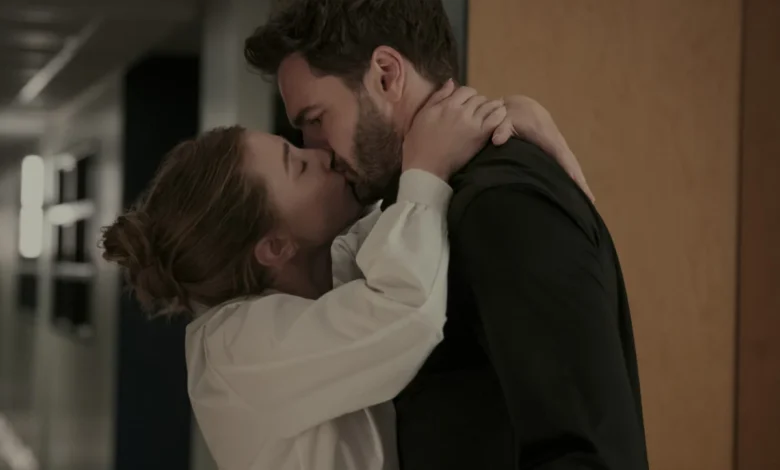
The Prime Video film adaptation of Ali Hazelwood’s global publishing phenomenon, The Love Hypothesis, has quickly established itself as a premier streaming success since its recent premiere. Directed by Claire Scanlon and starring Tom Bateman as Dr. Adam Carlsen and Lili Reinhart as Olive Smith, the romantic comedy translates a modern literary favorite into a visual medium while navigating the high expectations of a deeply invested fanbase. Bringing a best-selling novel to the screen requires a delicate balance of fidelity and adaptation, a challenge that Scanlon, screenwriter Sarah Rothschild, and the production team embraced by strategically restructuring key narrative milestones.
The story anchors itself on an accidental academic pairing. Olive, a Stanford University doctoral candidate, attempts to convince her best friend Ahn—played by Rachel Marsh—that she should pursue a mutual crush. To sell the illusion and deter any romantic awkwardness, Olive hastily executes a chaotic, unprompted kiss with the department’s notoriously stern and feared professor, Dr. Adam Carlsen. What begins as a mutually beneficial fake-dating arrangement—designed to provide Ahn with social clarity while helping Adam secure vital institutional research funding—rapidly snowballs into genuine affection. However, their academic romance faces severe ethical and professional threats with the arrival of Dr. Tom Benton, portrayed by Arty Froushan.
Strategic Structural Shifts and Adapting Chapter 16
One of the most intensely scrutinized creative decisions during production involved shifting the sequence of pivotal scenes from Hazelwood’s original text. Most notably, the emotionally charged and intimate Chapter 16 encounter between Olive and Adam was moved forward in the cinematic timeline. Scanlon has openly acknowledged the considerable pressure associated with adapting a scene that dominated fan discourse on social media platforms like TikTok.
Translating literary interiority to visual storytelling presents a distinct hurdle, particularly given the pacing required for a feature film. An extended sequence that occupies multiple chapters in a novel cannot be directly transposed onto the screen without altering the narrative rhythm. By relying on close collaboration with screenwriter Sarah Rothschild and monitoring audience engagement metrics, the production team calibrated the emotional weight of the scene to satisfy both newcomers and purveyors of the original text. To the relief of the filmmakers, the calculated adjustment was met with overwhelmingly positive reception from book readers, who comprised roughly forty percent of preview audiences.

Conversely, the narrative pacing necessitated repositioning the central conflict involving Dr. Tom Benton to follow the intimate milestone rather than precede it. In the original chronology of the novel, professional boundary violations occurred under different circumstances. For the screen adaptation, Scanlon deliberately engineered a high emotional peak—the romantic high of a successful academic conference—before pulling the rug out from under the protagonist.
Navigating Workplace Ethics and Plausible Deniability
The cinematic adaptation leans heavily into the institutional complexities of contemporary academia, specifically focusing on workplace dynamics, consent, and systemic abuse of power. When Dr. Carlsen initially reacts to Olive’s impulsive laboratory kiss, he jokingly threatens to file a Title IX complaint, highlighting the absence of formal consent. This playful banter later darkens when the narrative addresses genuine professional predatory behavior through Dr. Benton.
Dr. Benton, ostensibly a close colleague and friend of Adam whose research aligns with Olive’s pancreatic cancer studies, offers her a prestigious laboratory position at Harvard University. However, this academic opportunity is conditioned upon a corrupt quid pro quo: Olive must sleep with him to gain access to necessary equipment and facilities.
Scanlon and her creative team carefully constructed this sequence to reflect real-world patterns of professional misconduct and institutional exploitation. Set against the backdrop of the Society for Biological Development Conference, the scene where Olive visits what she assumes is Adam’s hotel room—only to find Benton—demonstrates calculated malice. Benton maintains plausible deniability throughout the interaction by holding a coffee cup, creating a visual and situational defense mechanism designed to frustrate accountability. By blocking the doorway and cornering Olive, the sequence accurately captures the terrifying reality of institutional coercion, where perpetrators weaponize plausible deniability and professional hierarchies to silence victims.
Expanding the Cinematic Universe and Visual Motifs
While honoring the core emotional arc of Hazelwood’s novel, Scanlon introduced several original cinematic elements designed to balance the narrative perspectives of the two lead characters. To ground Adam outside of his intimidating academic persona, the filmmakers discarded an initial concept involving an "Anything But Clothes" party due to logistical and wardrobe complications. Instead, they introduced a chaotic, handheld sequence where Adam participates in building a Rube Goldberg machine within Olive’s environment. This visual reversal—placing the rigid scientist into a chaotic student space—serves as a narrative shorthand, demonstrating his willingness to adapt and mesh with Olive’s world.

Visual motifs and homages are woven throughout the runtime. The opening sequence mirrors the concluding epilogue, framing the academic setting through the nervous perspective of incoming students facing institutional lore. The evolution of the departmental nickname for Dr. Carlsen—historically known as "Doctor Evil"—highlights the unchanging nature of university gossip, even as the administration transitions under new leadership. Furthermore, composer Laura Karpman injected subtle musical cues into key confrontations, paying overt homage to John Williams’ iconic imperial themes during pivotal moments of character conflict, such as Ahn’s dramatic face-off in the mirror and subsequent coffee shop showdown.
Character Depth and Supporting Performances
A significant strength of the film adaptation lies in the deliberate avoidance of flat, tokenistic tropes among supporting roles. This is best exemplified by the character of Malcolm, portrayed by Jaboukie Young-White. Rather than fulfilling a superficial best-friend archetype, Malcolm is written as a multi-dimensional, flawed individual who struggles professionally, falters under pressure, and occasionally fails to support his peers effectively. His narrative arc requires genuine accountability, including confronting his mistakes and executing meaningful apologies. This complexity elevates the supporting cast, giving the film a grounded emotional texture that transcends standard romantic comedy formulas.
Production took place primarily in Montreal, supplemented by strategic exterior shoots at the California Institute of Technology (Caltech) to capture authentic campus architecture and foliage. Author Ali Hazelwood visited the set during production, offering validation to the cast and crew. Rather than inserting a traditional cameo, Hazelwood maintained a supportive, observational presence, championing the adaptation and reinforcing the collaborative spirit of the project.
Broader Industry Implications and Future Projects
The success of The Love Hypothesis on Prime Video underscores the enduring commercial viability of literary adaptations within the romantic comedy genre, particularly those driven by female-centric narratives and millennial-targeted literary intellectual property. By blending screwball comedy sensibilities inspired by classic cinema—such as His Girl Friday and It Happened One Night—with contemporary scientific settings, Scanlon has contributed to a broader revitalization of a cinematic genre that has frequently suffered from formulaic stagnation.
Building on the momentum of this release, Scanlon is already spearheading her next major literary-to-television adaptation: an Amazon Prime Video series based on The Probability of Miracles. Unlike standard young adult tropes, the upcoming project explores surrealist themes through the narrative of a teenager facing a terminal cancer diagnosis. Featuring cinematography led by Lindsay George and starring Ginnifer Goodwin, the series reflects Scanlon’s continued commitment to elevating production values and visual artistry within streaming media. Through meticulous attention to tone, character depth, and structural integrity, projects like The Love Hypothesis and its successors are redefining the creative standards for contemporary screen adaptations.