Marie Noon, a Michigan resident battling adult-onset Still’s disease, faces a daily regimen of eight medications to manage her severe inflammatory arthritis. These vital prescriptions control her heart rate to prevent strokes, alleviate debilitating headaches, and manage fluid retention. Her life, once a picture of suburban normalcy—juggling cheerleading practices, choir rehearsals, PTA meetings, and a banking career—was irrevocably altered by her diagnosis over a decade ago. The disease plunged her into a world of excruciating pain, confining her to crawling to the bathroom and enduring constant suffering. For eight years, she was unable to work, her life punctuated by lengthy hospitalizations, leaving her with the grim thought, "I honestly thought I was going to die."
The profound personal toll of her illness was compounded by a shocking bureaucratic hurdle: Michigan denied her application for Medicaid benefits last year, even after she lost her private insurance. The denial, attributed to an IT error according to her attorney, threatened her ability to afford essential medical care. "I can’t afford my medical care. I have to have insurance," Noon stated, highlighting the precarious situation she faced as she attempted to re-enter the workforce.
This incident is not an isolated case but points to systemic issues within Michigan’s Medicaid eligibility system, managed under extensive contracts with Deloitte, a global consulting firm. Since 2006, Deloitte has secured contracts worth approximately $768 million for its role in operating Michigan’s system, known as Bridges, which processes applications for Medicaid, SNAP (food stamps), and other benefits. Nationwide, Deloitte has a significant presence, holding contracts in at least 25 states for similar eligibility systems.
A KFF Health News investigation has revealed that Michigan’s system has a concerning track record of misclassifying individuals with disabilities, leading to the denial of essential coverage or the assignment of less comprehensive benefit packages. These problems echo issues previously identified in other states, including a class-action lawsuit in Tennessee and documented problems in Texas, raising serious questions about the reliability and fairness of the technology governing access to vital safety net programs.
A System Under Scrutiny
Deloitte, through its spokesperson Karen Walsh, has denied that its systems are the root cause of routine denials for individuals with disabilities. Walsh stated, "We found no system anomalies causing routine denials of Medicaid for people with disabilities." She further emphasized that eligibility systems are state-owned and built to specific state requirements, adding, "We will continue to work at the direction of our state clients."
However, state officials have offered differing perspectives. Lynn Sutfin, a spokesperson for Michigan’s Department of Health and Human Services, stated the state is "not aware of any widespread or systemic issues" within the Bridges system related to disability-based eligibility. Despite these assurances, records indicate Deloitte has been responsible for the development, implementation, maintenance, operations, and enhancements of the Michigan system for at least 14 years.
The complexities and potential vulnerabilities of these eligibility systems are particularly critical as states prepare for significant changes to their Medicaid programs, mandated by federal legislation. These upcoming reforms, driven by the "One Big Beautiful Bill Act," are prompting states to rapidly update their IT infrastructure.
The Scale of the Challenge

Nationwide, approximately 15.5 million individuals enrolled in Medicaid have a disability, according to KFF data. The efficient and accurate functioning of eligibility systems is paramount to ensuring these vulnerable populations receive the care they need. Professor Pamela Herd from the University of Michigan, a researcher on bureaucratic obstacles to government benefits, warns, "When these administrative systems get overloaded, everyone gets impacted. The systems are going to be really, really strained."
Marie Noon’s experience illustrates the direct impact of these system failures. She was eligible for Medicaid through a program designed for disabled adults who work. However, the state’s computer system reportedly failed to recognize her disability and incorrectly flagged her income as too high for eligibility. This oversight led to her being denied coverage, forcing her to scramble for expensive prescriptions, some of which she needs to take twice daily. The financial strain and uncertainty were immense, with medication costs fluctuating wildly. Her doctor, to mitigate her medical bills, agreed to fewer appointments. "It was kind of a nightmare," Noon recounted.
A History of Errors and Escalating Costs
Medicaid, a critical safety net program jointly funded by the federal government and states, provides coverage to an estimated 67 million low-income individuals and those with disabilities. Companies like Deloitte are contracted to design and manage the complex computer systems that determine eligibility for Medicaid and SNAP.
Previous KFF Health News investigations have highlighted a history of errors in Deloitte-operated eligibility systems, which have resulted in eligible individuals being deprived of essential benefits. Kenneth Smith, a Deloitte executive, has previously stated that these systems are state-owned and operated, asserting, "They’re not Deloitte systems."
The current push to update state Medicaid systems is driven by stringent requirements from federal legislation, which could lead to the disenrollment of millions from Medicaid and SNAP by 2034. While many of these new coverage restrictions do not apply to individuals with disabilities, the sheer scale of the system changes and the demands placed on state agencies and their IT infrastructure are expected to cause significant disruption.
In Michigan, the state’s 2010 Office of the Auditor General report raised concerns about the oversight of the Bridges system, noting ineffective project administration and a failure to ensure the state’s independent maintenance capabilities due to a lack of knowledge transfer from the contractor. This resulted in the original $70 million contract ballooning by $50 million, a 71% increase, with further millions added over time, bringing the total cost to $124.1 million for the initial contract. At the time, the audit projected "significant additional costs" for maintaining the contract. Today, Sutfin asserts that the state is "fully capable of operating and maintaining Bridges independently." Deloitte’s latest contract for the Bridges system, valued at $197.4 million, is set to expire in 2030.
The "Freedom to Work" Program and Wrongful Denials
Noon’s application for Medicaid through the "Freedom to Work" program, which caters to disabled working adults, was submitted in August. By September, she received a denial notice citing incorrect income information and a false assertion that she was not disabled. According to her attorney, Anastassia Kolosova of Disability Rights Michigan, the state already possessed the necessary documentation to confirm her disability. Kolosova believes the system failed to identify Noon as disabled, leading to the application of an incorrect income formula and her subsequent ineligibility.
The financial burden of this denial was immediate. Noon was forced to pay hundreds of dollars out-of-pocket for her medications, relying on discount coupons. The uncertainty of her monthly drug costs was a constant source of stress. "I can’t tell you how many times I just wanted to give up," she confessed, emphasizing the emotional toll of navigating the appeals process while bearing the full cost of her treatment. It wasn’t until January, after months of fighting and paying for her medications through appeals, that her coverage was finally reinstated. "I literally cried," Noon said. "It was a really big deal."
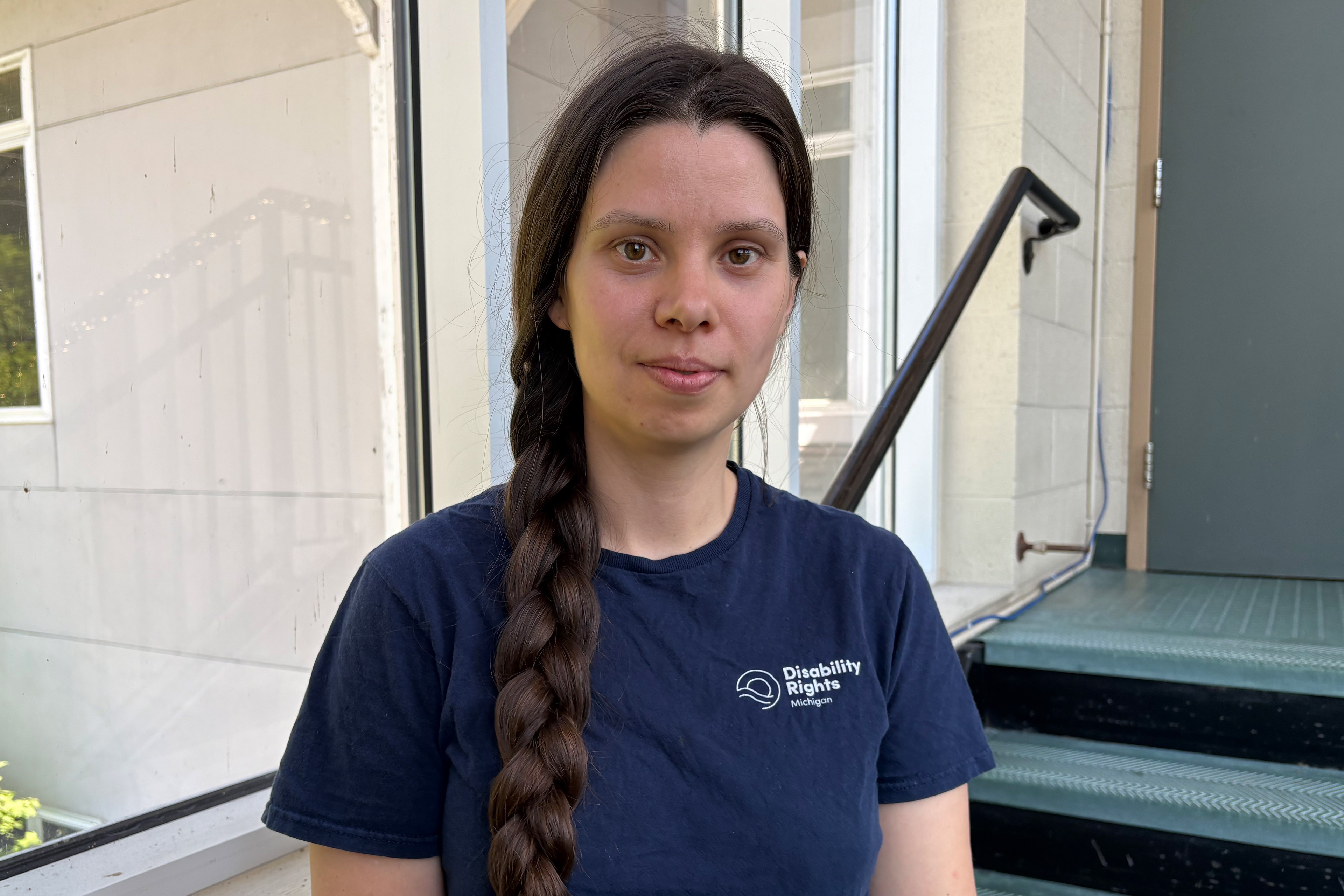
Kolosova reports a growing number of calls from individuals facing similar denials from the "Freedom to Work" program, stating, "There’s something wrong with the system if they’re relying on individual caseworkers to catch this. The system needs to work."
Broader Patterns of Systemic Failure
Marie Noon’s experience is not an isolated incident. Similar issues have been reported in other states utilizing Deloitte-operated eligibility systems. In Texas, in 2023, Lilly Livingston, a 22-year-old with Down syndrome, was abruptly removed from Medicaid. Livingston, who requires extensive medical care, including speech and occupational therapy, due to severe jaw misalignment and related health issues, was mistakenly enrolled in "Healthy Texas Women," a program offering only limited services such as breast and cervical cancer screenings and family planning.
Terry Anstee, an attorney with Disability Rights Texas, intervened, describing the situation as a "nightmare" and an "URGENT" matter in emails to state officials. Despite Livingston qualifying for Medicaid through multiple avenues, an "error" had stripped her of essential benefits. While a Texas Health and Human Services spokesperson confirmed Livingston was erroneously enrolled, they asserted she did not experience a lapse in coverage. Anstee disputes this, maintaining that Livingston did face gaps in her care. Deloitte declined to comment on Livingston’s case.
Michigan has also seen instances of individuals with disabilities being wrongly enrolled in "Plan First," a limited Medicaid program focused on sexual health and family planning services. This program does not provide the comprehensive care required by individuals with disabilities. Malcolm Kletke, a lobbyist for the Community Mental Health Association of Michigan, expressed alarm in emails to state officials, stating that these enrollees were losing access to "services essential to their recovery and quality of life."
State records indicate a concerning 10% decline in Medicaid enrollment within the category for people with disabilities in Michigan over roughly four years, a trend deemed unusual by experts given the typical reasons for program departure. While the Michigan Department of Health and Human Services acknowledged advocate concerns and implemented changes to the system in January 2025, preventing the approval of "Plan First" benefits until all other coverage options are exhausted, they stated these changes were not to correct system errors but rather to "address concerns raised by advocates."
Implications for the Future
The ongoing issues with Medicaid eligibility systems managed by large IT contractors like Deloitte have significant implications for the millions of Americans who rely on these programs. As states face mounting pressure to adapt their systems to new federal mandates, the risk of further errors and disruptions increases. The reliance on complex, often opaque, technological solutions to determine access to essential healthcare raises fundamental questions about accountability, transparency, and the fundamental right to healthcare for vulnerable populations. The experiences of Marie Noon and Lilly Livingston underscore the critical need for robust oversight, independent auditing, and a commitment to ensuring that technology serves, rather than hinders, the delivery of vital public health services. The efficiency and accuracy of these systems are not merely technical concerns; they are matters of life and well-being for countless individuals.