The Supreme Court’s Recent Ruling on Monsanto v. Durnell: Clarifying the Chasm Between Legal Causation and Scientific Certainty

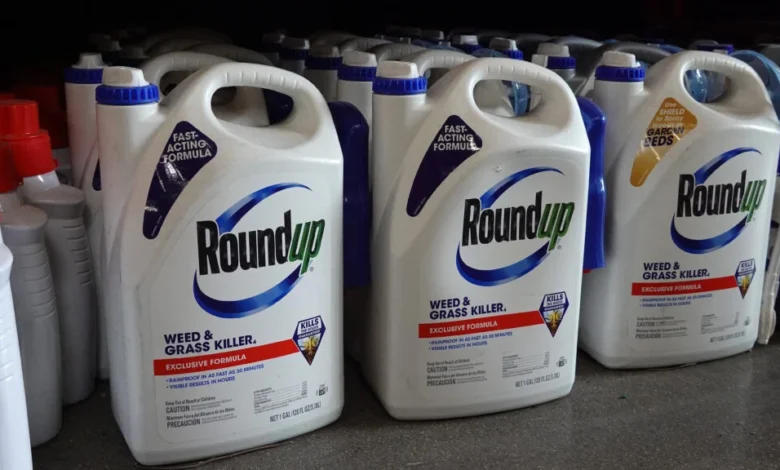
When the Supreme Court handed Monsanto a significant victory in Roundup litigation on Thursday, many headlines proclaimed a scientific event: a definitive ruling on whether Roundup causes cancer. However, the case of Monsanto v. Durnell did not settle this complex scientific question. Instead, the Court determined that federal pesticide law preempts state-level failure-to-warn claims when the Environmental Protection Agency (EPA) has not mandated a cancer warning on the product’s label. While this represents a crucial legal development, it is distinct from a scientific determination regarding the safety or carcinogenicity of glyphosate, the active ingredient in Roundup.
This ruling serves as the latest illustration of a pervasive and often confusing issue: the divergent ways in which science and law grapple with the concept of "causation." While both disciplines employ this term, their underlying questions and methodologies are fundamentally different, leading to potential public misunderstanding. This distinction becomes particularly evident at the intersection of clinical care, population-health research, and the legal system, as highlighted by the author’s own work bridging these fields.
Understanding Causation: Science vs. Law
In the realm of epidemiology, causation is typically understood as a population-level inference. Researchers investigate whether a specific exposure reliably alters disease risk across groups of people. This rigorous process involves multiple pillars of evidence: replication of findings, statistically significant associations, dose-response relationships (where higher exposure leads to greater risk), biological plausibility (a logical mechanism by which the exposure could cause harm), and meticulous efforts to rule out confounding factors that could offer alternative explanations. Even with this comprehensive approach, scientific conclusions remain probabilistic. Identifying a risk factor increases the likelihood of a disease but does not definitively explain why an individual person contracted an illness.
The legal system, conversely, operates under a different mandate. In civil litigation, the plaintiff generally bears the burden of proving that their specific injury would likely not have occurred in the absence of the defendant’s actions. This legal standard is not designed to achieve global scientific consensus. Its primary purpose is to resolve disputes and assign responsibility. This fundamental difference in objectives explains the often-confusing landscape of litigation surrounding products like Roundup.
The Glyphosate Conundrum: A Tale of Two Jurisdictions
The debate over glyphosate’s carcinogenicity exemplifies this dichotomy. In 2015, the International Agency for Research on Cancer (IARC), a specialized agency of the World Health Organization, classified glyphosate as "probably carcinogenic to humans." This classification was based on limited evidence from human studies, sufficient evidence in experimental animals, and strong mechanistic evidence.
However, regulatory bodies in the United States and Europe have reached different conclusions. The U.S. Environmental Protection Agency (EPA), under its regulatory framework, has not found sufficient evidence to conclude that glyphosate causes cancer. Similarly, the European Food Safety Authority (EFSA) has stated that glyphosate is unlikely to pose a carcinogenic risk to humans under normal use conditions. These differing scientific and regulatory opinions create a complex backdrop for legal proceedings.
It is crucial to understand that a jury’s verdict in a Roundup case does not determine the global scientific status of glyphosate. Instead, the jury hears the specific details of an individual plaintiff’s case, including their history of exposure, diagnosis, expert testimony from both sides, internal corporate documents, the adequacy of product warnings, and the overall conduct of the defendant. A plaintiff’s verdict signifies that the legal threshold for causation was met in that specific instance. It does not equate to a universal scientific consensus that glyphosate causes cancer in all exposed individuals or populations.
The Monsanto v. Durnell ruling specifically addressed a scenario where a state law claim for failure to warn clashed with federal labeling requirements. The Supreme Court held that if the EPA, the federal agency tasked with regulating pesticides, has not mandated a cancer warning on a product label, then a state can prevent individuals from suing the manufacturer for failing to provide such a warning. This ruling hinges on the principle of federal preemption, which dictates that federal law can supersede state law in certain areas.
Talc Litigation: Another Arena of Divergent Causation
The litigation surrounding talc-based products, such as Johnson & Johnson’s baby powder, presents a parallel to the glyphosate disputes, illustrating the same problem in a different context. Plaintiffs have alleged that talc-based products contributed to ovarian cancer or mesothelioma. Some claims focus on talc itself, while others address concerns about alleged asbestos contamination. Asbestos, a well-established carcinogen, presents a different scientific and legal challenge compared to talc.
In 2024, IARC also classified talc as "probably carcinogenic to humans," citing limited evidence in humans, sufficient evidence in experimental animals, and strong mechanistic evidence. While this classification is significant, it does not automatically mean that every instance of cancer occurring after talc use is directly caused by the product.
The scientific inquiry into talc focuses on whether talc, or talc contaminated with asbestos, or perineal talc use reliably increases cancer risk across populations, under specific exposure conditions, and with a quantifiable level of confidence. The courtroom inquiry, however, is distinct: Would this particular plaintiff’s injury have occurred if not for the product exposure, and was the causal link legally sufficient to hold the defendant responsible?
Talc litigation further demonstrates why juries do not evaluate causation in a purely scientific vacuum. Plaintiffs often present arguments that extend beyond epidemiological data, incorporating evidence of corporate knowledge, internal documents, inadequate warnings, disputed testing practices, and allegations of concealment. If jurors perceive a company as having acted deceptively or maliciously, they may interpret ambiguous scientific evidence in a more aggressive light, leaning towards finding causation.
The Human Tendency to Seek Definitive Causes
This complex interplay is further amplified by a deeply ingrained human discomfort with randomness. Cancer, a disease with profound and often devastating consequences, can feel too significant to be attributed solely to background risk, chance, or a confluence of multifactorial vulnerabilities. Consequently, jurors and the public alike often gravitate towards identifying a single, concrete cause for such illnesses.
Social Media and Youth Mental Health: A New Frontier
These same dynamics are now unfolding in the litigation surrounding social media’s impact on youth mental health. States, school districts, and families are bringing legal challenges, asking courts to determine whether platforms like Instagram, TikTok, Snapchat, and YouTube have contributed to rising rates of anxiety, depression, self-harm, addictive usage patterns, educational disruption, and associated public costs. Several of these cases have already resulted in settlements. To the public, these legal actions can easily be interpreted as scientific pronouncements: "Social media caused teen depression."
However, the scientific question is considerably more intricate. Researchers must rigorously investigate whether social media exposure, or specific platform design features, independently causes mental health outcomes across broad populations. This necessitates disentangling social media use from a myriad of other adolescent challenges, including pre-existing distress, loneliness, family instability, sleep disruption, bullying, genetic predispositions, psychiatric vulnerabilities, the lingering effects of the pandemic, and the possibility of reverse causation. For instance, depressed or socially isolated adolescents might engage with social media differently than their peers, making it difficult to ascertain whether heavy use is a cause, a consequence, or both.
A scientifically cautious conclusion does not imply that social media is benign or that specific platform features cannot contribute to harm. Rather, it underscores that the causal question is multifactorial and exceptionally difficult to isolate with definitive certainty at a population level.
The Legal Imperative: Moving Forward Without Perfect Certainty
Despite the scientific complexities, courts may proceed with these cases because they are not designed to await absolute causal certainty. The legal question often centers on whether platform design choices—such as algorithmic recommendations, infinite scroll features, pervasive notifications, engagement loops, filters, or other addictive design elements—foreseeably contributed to harm in particular users or imposed costs on public systems like schools. In this legal context, internal documents, warnings, product design choices, foreseeability of harm, and corporate conduct can hold significant legal weight, even when population-level scientific evidence remains unsettled.
Asbestos: A Contrasting Case of Scientific and Legal Convergence
Asbestos litigation provides a useful contrast to the aforementioned cases. In asbestos disputes, legal causation and scientific consensus are often closely aligned. The causal relationship between asbestos exposure and mesothelioma, a rare and aggressive form of cancer, is strong, well-established, and widely accepted by the scientific and medical communities. Consequently, courts adjudicating asbestos cases are not operating within the same zone of scientific uncertainty that characterizes many claims involving glyphosate, talc, or social media.
Navigating the Nuances: Implications for Public Understanding
It is crucial to emphasize that the argument here is not that plaintiffs are always incorrect or that courts should disregard potential harm until science achieves absolute certainty. The argument is more nuanced: not every legal finding, jury verdict, or settlement carries the same weight or meaning as a scientific conclusion.
In some instances, law and science do converge. However, in many other situations, courts may assign responsibility in individual disputes while the broader scientific evidence remains mixed, unsettled, or difficult to translate into definitive individual causation. Public confusion arises when these distinct outcomes are conflated into a single, undifferentiated category.
Large jury awards, for example, can create the perception of settled scientific causation when the underlying scientific evidence is, in fact, still debated. Settlements, often reached to avoid protracted and costly litigation, can be misinterpreted as admissions of causation when they are primarily financial resolutions of legal exposure. Regulatory disagreements, which can stem from differing evidentiary standards or risk assessment methodologies, may lead the public to assume corruption when the core issue is simply divergent regulatory approaches. Conversely, scientific caution can sometimes be misconstrued as evasion, and legal accountability can be mistaken for definitive scientific proof. Neither interpretation is reliably accurate.
Science is fundamentally designed to estimate risk, test hypotheses, identify patterns, and minimize the likelihood of false causal inferences. Law, on the other hand, is structured to resolve disputes, assign responsibility, compensate for injuries, deter misconduct, and impose duties. While these functions are related and often inform each other, they are not interchangeable.
The Erosion of Public Trust and the Path Forward
This distinction is critical for maintaining public trust. If individuals believe that every jury verdict constitutes definitive scientific consensus, then subsequent scientific caution may be perceived as corrupt. If the public assumes that regulatory caution invalidates every legal claim, then courts may appear irrational. If a settlement is viewed as proof of causation, then the absence of admitted liability might be seen as evasion.
Recommendations for Clarity
To address this pervasive confusion and bolster public trust, several steps are essential:
1. Explicit Articulation of Causal Questions: Courts and legal professionals must be more explicit in articulating precisely which causal question is being addressed. This includes distinguishing between general causation (whether a substance can cause harm at all), specific causation (whether it caused harm to a particular individual), regulatory risk assessment, failure to warn, product design defect, foreseeability of harm, and legal preemption.
2. Separation in Expert Testimony and Reporting: Expert testimony and public reporting on legal cases should maintain clear distinctions between these categories. A hazard classification, for instance, is not equivalent to proof that a specific product caused an individual plaintiff’s injury. A settlement is not the same as an admission of causation. A regulatory decision does not hold the same evidentiary weight as a jury verdict. A Supreme Court preemption ruling, as seen in Monsanto v. Durnell, is not a scientific exoneration of a product.
3. Responsible Journalism: Journalists play a vital role in bridging this gap. Coverage of complex legal cases, such as those involving Roundup, social media, or talc, should go beyond simply reporting who won. It should also clearly explain what specific legal question the court actually answered. The Monsanto v. Durnell ruling, for example, was a significant development concerning federal pesticide labeling laws and state tort law, but it was not a final scientific verdict on the carcinogenicity of glyphosate.
Conclusion: Reconciling Legal Accountability and Scientific Caution
Public trust will continue to erode if every legal outcome is treated as a definitive scientific finding. A courtroom can indeed assign responsibility for harm without definitively settling the underlying scientific questions. Science can maintain its necessary caution without denying the reality of potential harm. And courts can limit liability or assign responsibility without necessarily proving that a product is entirely harmless. By clearly delineating the distinct roles and methodologies of law and science, we can foster a more informed public discourse and build greater confidence in both our legal and scientific institutions.
Related posts: