Texas Energy Transition Accelerates as Solar Power Set to Eclipse Coal Generation in Historic Market Shift

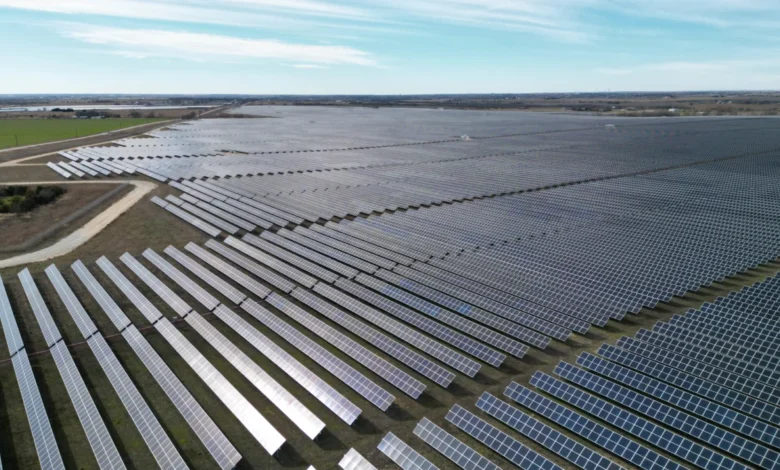
The energy landscape of the United States is undergoing a profound transformation, and nowhere is this shift more visible than in the state of Texas. Long synonymous with oil derricks and coal-fired power plants, the Lone Star State is now on the verge of a historic milestone: solar energy is projected to overtake coal as a primary source of electricity generation within the next two years. According to the latest data from the U.S. Energy Information Administration (EIA), the power market managed by the Electric Reliability Council of Texas (ERCOT) is expected to receive 78 billion kilowatt-hours from solar in 2026, significantly outpacing the 60 billion kilowatt-hours projected from coal. This transition marks a definitive end to the era of coal dominance in one of the world’s most demanding energy markets and highlights a divergence between market-driven realities and federal political rhetoric.
The Statistical Surge: Solar’s Rapid Ascent
The rise of solar in Texas has not been a gradual incline but rather an exponential surge. Just a decade ago, solar power represented a negligible fraction of the state’s energy mix. However, a combination of falling hardware costs, favorable geography, and a unique market structure has propelled the industry to the forefront of the state’s power grid.
The EIA’s projections for 2026 are supported by current performance trends. In 2023, solar generation in Texas surpassed coal output on a monthly basis from March through August, capitalizing on the intense summer sun that drives peak demand. For 2024, that window of dominance is expected to widen, with solar likely to outproduce coal from March through December. By 2027, the trajectory becomes even more pronounced, with solar production estimated to reach 99 billion kilowatt-hours—a 27 percent increase over its 2026 levels. At that point, the solar industry will have effectively left its coal-burning competitors in the rearview mirror.
Nationally, the trend mirrors this shift, though Texas is moving faster than the rest of the country. An analysis by the energy think tank Ember noted that the combined generation of wind and solar surpassed coal nationwide for the first time in early 2024. In Texas, however, the solar-specific overtake of coal represents a more localized and aggressive disruption of the traditional energy hierarchy.
A Chronology of Deregulation and Diversification
To understand how Texas became an accidental leader in the renewable energy transition, one must look back at the legislative decisions of the late 1990s. In 1999, the Texas Legislature passed Senate Bill 7, which deregulated the state’s electricity market. This move was intended to foster competition, lower prices, and strip away the monopoly power of traditional utilities.
The deregulation created an "energy-only" market, where generators are paid only for the electricity they provide to the grid in real-time, rather than being subsidized for maintaining capacity. This environment initially fueled a massive boom in wind energy in West Texas throughout the 2000s and 2010s. The infrastructure built for wind—specifically the Competitive Renewable Energy Zones (CREZ) transmission lines—laid the groundwork for the current solar explosion.
As the cost of photovoltaic panels plummeted globally, developers realized that the same transmission lines and vast tracts of land that favored wind were also ideal for solar. Unlike wind, which often peaks at night in Texas, solar production aligns perfectly with the state’s high-demand afternoon hours, particularly during the blistering summer heatwaves. This economic synergy has made solar the preferred choice for new generation projects, while no new coal plants have been commissioned in the state for years.
The Economic Inevitability of Coal’s Decline
The decline of coal in Texas is driven as much by economics as it is by environmental considerations. Coal-fired power plants in the state are aging, with many facilities exceeding 40 years of service. Maintaining these plants is becoming increasingly expensive compared to the low operational costs of solar farms.
Furthermore, coal plants are "baseload" generators, designed to run constantly at a steady output. In a market like ERCOT, where prices can fluctuate wildly based on real-time demand, the lack of flexibility in coal generation is a financial liability. Solar, while intermittent, provides power when it is most valuable. When combined with the rapid deployment of battery energy storage systems (BESS), solar becomes a formidable competitor to traditional baseload power.
Texas is currently adding battery storage faster than almost any other state. These batteries store excess solar energy produced during the day and discharge it during the "net load" peak—the hours just after sunset when solar production drops but air conditioning demand remains high. This technological pairing has effectively neutralized the primary argument against solar: that it cannot provide reliability after dark.
Federal Policy vs. Lone Star Reality
The rapid expansion of solar in Texas stands in stark contrast to the energy policies often promoted at the federal level. During the Trump administration, significant efforts were made to revitalize the coal industry under the banner of "energy dominance." These efforts included Department of Energy (DOE) initiatives to keep struggling coal plants operational through emergency orders and subsidies, often at a significant cost to taxpayers.
Simultaneously, the Department of the Interior faced criticism for policies that slowed or blocked wind and solar developments on public lands. Federal officials frequently argued that renewable energy was a threat to grid stability, advocating instead for "firm" power sources like coal and natural gas.
However, the Texas experience suggests that these concerns may be overstated. Despite the surge in renewables, the ERCOT grid has remained functional through record-breaking heatwaves and extreme weather events, largely by utilizing a diverse portfolio that includes gas, nuclear, wind, solar, and batteries. The state’s "maverick" status—maintaining its own grid to avoid federal oversight—has allowed it to ignore federal preferences in favor of market-driven results. In Texas, the "war on coal" was not won by regulation, but by the sheer force of competition.
Broader Implications and Lessons for Other States
The Texas solar surge offers a blueprint, albeit an unconventional one, for other states grappling with climate goals and energy transitions. While many liberal-leaning states have set ambitious renewable energy mandates, they often struggle with slow permitting processes, local opposition, and "gold-plating" by monopoly utilities that have a vested interest in maintaining existing infrastructure.
Texas has demonstrated that by lowering barriers to entry and fostering a competitive market, renewable energy can flourish even without the ideological backing of the state’s political leadership. The lessons for other states include:
- Streamlining Permitting: Texas’s lax building regulations and private land-use laws have allowed solar projects to go from conception to completion in a fraction of the time required in states like California or New York.
- Market Structure Matters: An energy-only market forces generators to be efficient. In Texas, the cheapest electron wins, and currently, those electrons are coming from the sun.
- Grid Interconnection: The proactive construction of transmission lines (the CREZ project) was essential. Without the "highway" to move power from the sunny plains to the urban centers of Dallas, Houston, and Austin, the solar boom would have stalled.
- Embracing Batteries: The integration of storage is the final piece of the puzzle. By allowing batteries to compete fairly in the market, Texas has created a self-balancing system that mitigates the intermittency of renewables.
The Future: Toward 2027 and Beyond
As 2026 approaches, the transition from coal to solar will likely be viewed as a watershed moment in American industrial history. The EIA’s projection that solar will produce 99 billion kilowatt-hours by 2027 suggests that the pace of change is only accelerating.
This shift does not mean that fossil fuels will disappear from the Texas grid entirely. Natural gas remains a critical component for balancing the system during periods of low wind and solar output. However, the role of coal—once the backbone of the American middle class and the primary engine of industrial growth—is being relegated to a secondary, and eventually obsolete, position.
The Texas model proves that the transition to clean energy does not require a choice between reliability and sustainability. By leveraging market forces and technological innovation, the state is building a more resilient, cheaper, and cleaner power grid. As the sun continues to rise over the vast solar farms of West Texas, the smoke from the state’s remaining coal stacks is slowly fading into the past, marking the beginning of a new era in energy dominance—one defined not by what is dug out of the ground, but by what is captured from the sky.