The Trump Administration Grants Broad Exemptions to U.S. Coke Plants Amidst Rising Health Concerns and Political Fallout

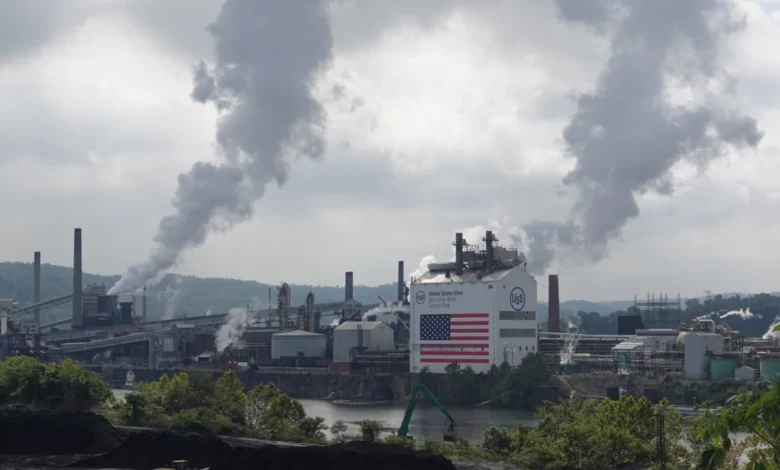
North America’s largest coke plant, situated on the west bank of Pennsylvania’s Monongahela River, continues its industrial operation of transforming superheated coal into coke, a carbon-rich fuel vital for steel production. This process, however, has long been a source of concern for nearby communities, particularly children. Research has indicated that students at Clairton Elementary School, located approximately a mile from the U.S. Steel facility, and at other elementary schools situated near major pollution sites in Pennsylvania, experience significantly higher rates of asthma compared to their peers elsewhere in the state.
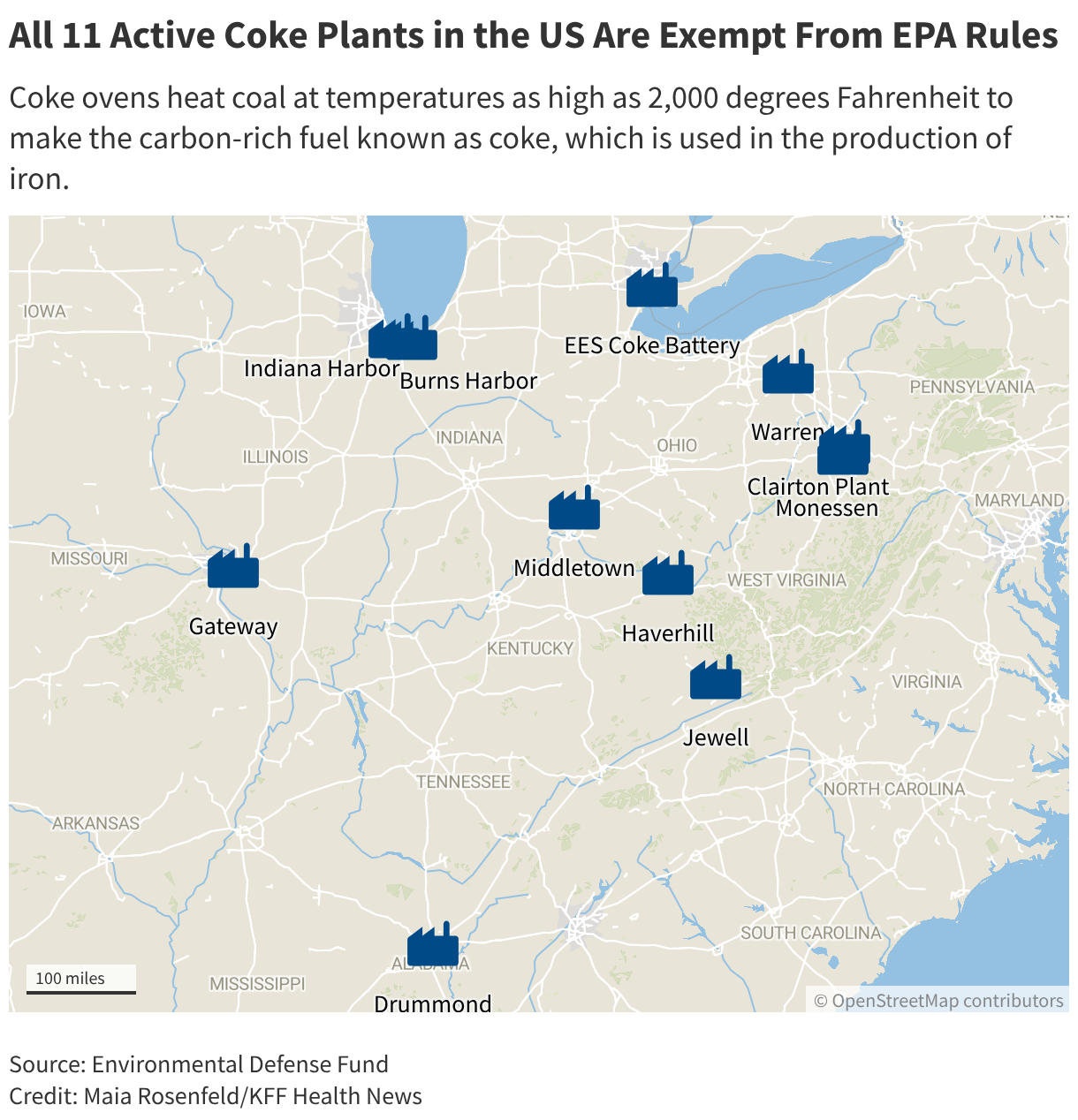
In response to these documented health disparities and broader environmental concerns, the Biden administration had introduced a new rule aimed at curbing pollution from coke oven plants. This regulation was intended to provide a measure of relief and hope for residents and environmental advocates. However, in a move that has drawn sharp criticism from public health and environmental groups, President Donald Trump, prior to the rule’s effective date, granted a two-year exemption to all 11 active coke plants in the United States, including the one in Clairton.
This decision has placed the Trump administration in a complex political position, particularly as it attempts to align itself with the populist ideals of the "Make America Healthy Again" (MAHA) movement. While the MAHA agenda ostensibly champions improved public health, including better food choices and reduced corporate environmental harm, critics argue that these recent actions directly contradict those very principles. Health researchers warn that such a rollback of environmental protections could lead to an increase in pollution-related illnesses and consequently escalate healthcare expenditures. Furthermore, these environmental initiatives may carry significant political ramifications, potentially eroding support for Republican candidates in upcoming elections if the movement’s followers perceive the party as prioritizing industrial interests over the MAHA agenda.
Background: The Clairton Coke Works and Its Impact
The Clairton Coke Works, sprawling across nearly 400 acres, is a critical component of the American industrial landscape. The plant heats coal to temperatures as high as 2,000 degrees Fahrenheit in its coke ovens to produce up to 4.3 million tons of coke annually. This product is indispensable for blast furnaces used in iron production. The operational nature of coke production is inherently "dirty," releasing hazardous emissions such as benzene, a known carcinogen linked to anemia and leukemia by the Centers for Disease Control and Prevention, and sulfur dioxide, a potent trigger for severe asthma attacks.
The Clairton plant’s history is marred by repeated operational failures and emissions-related incidents. These include fatal explosions and significant releases of toxic chemicals. Since 2022, the facility has incurred over $56 million in fines from the Allegheny County Health Department, a substantial portion stemming from a major fire in 2018 that resulted in elevated emissions. The plant has also consistently violated the Clean Air Act, with EPA facility reports indicating non-compliance in each of the last 12 quarters, with the most recent compliance monitoring occurring in July 2025.
Nippon Steel Corporation acquired U.S. Steel, the operator of the Clairton plant, in the previous year. While the company did not respond to requests for comment, a spokesperson for U.S. Steel stated that the company invests $100 million annually in environmental compliance at the Clairton facility and emphasized that "Environmental stewardship is a core value at U. S. Steel, and we remain committed to the safety of our communities."
The economic landscape of Clairton has been profoundly shaped by the decline of the steel industry. Once a vibrant town with numerous amenities, its population has dwindled from over 19,000 in the mid-20th century to fewer than 6,000 by 2024. Many homes stand abandoned, a stark visual testament to the economic downturn. The town’s struggles were even depicted in the 1978 film The Deer Hunter, which portrayed the harsh realities of industrial life. Today, approximately 33% of Clairton’s residents live below the poverty line.

Despite the economic contributions of the plant, including 1,200 manufacturing jobs and hundreds of millions of dollars in annual tax revenue, residents and advocacy groups have consistently raised alarms about health issues attributed to its emissions. Carla Beard-Owens, a Clairton resident, shared her personal experiences at a 2025 County Council meeting, stating, "My parents are gone. My mom had cancer, my dad. I lost a lot of loved ones and seen other ones pass because of this mill."
Public Health Crisis: Asthma Rates and Vulnerable Populations
The correlation between proximity to industrial pollution and adverse health outcomes has been a subject of intense scrutiny. Pediatric allergist Deborah Gentile led a study examining asthma rates among 1,200 children attending schools near major pollution sites, including Clairton Elementary. The findings were alarming: these children exhibited asthma rates nearly triple the national average. The study, detailed in research published by GASP Pittsburgh, further highlighted that African American youth bore the highest burden of this condition. Dr. Gentile expressed her shock, stating, "We were shocked. It was double or triple what we expected. The people are proud of their industrial background. We need steel, but they’re not running a good enough operation."
A subsequent study revealed a significant link between elevated sulfur dioxide pollution and school absenteeism among children with asthma living near the coke plant, reporting an 80% higher chance of missing school during periods of high pollution.
Allegheny County, which encompasses Clairton and Pittsburgh, is home to numerous industrial facilities. Researchers have consistently linked the region’s air pollution to increased mortality rates, chronic heart disease, and adverse birth outcomes. A 2018 EPA report identified the county as being in the top 1% of counties nationwide for cancer risk from stationary industrial air pollutants. Data analyzed by KFF Health News indicates that Clairton has an age-adjusted cancer death rate of 170 per 100,000 people, surpassing the broader county rate of 150 deaths per 100,000. The American Lung Association’s 2025 report assigned the county an ‘F’ rating for its levels of particle pollution. PennEnvironment, an environmental group involved in a settlement with U.S. Steel regarding the Clairton plant, reported that the facility was responsible for 1.1 million pounds of toxic releases in 2021, constituting 60% of all such releases in the county that year.
Political Maneuvering: Waivers, Exemptions, and the MAHA Movement
The regulatory landscape surrounding coke oven emissions has become a focal point of political contention. The Biden administration’s rule, set to take effect in July 2025, mandated that coke plants implement stricter controls on leaks from oven lids and doors, monitor for benzene at their property lines, and take measures to reduce emissions of this carcinogen.
However, the Trump administration has signaled a different approach, one that prioritizes the revival of the coal industry. In the preceding year, the administration invited hundreds of industrial facilities, including coke plants, to apply for presidential waivers from nine separate EPA rules enacted in 2024. This was followed by President Trump’s November decision to grant all U.S. coke plants a two-year reprieve from compliance with these new standards.
An EPA spokesperson, Brigit Hirsch, defended the exemption, stating that the technology required to meet the new standards is not yet readily available. She argued that forcing plants to comply prematurely would lead to facility closures, job losses, and no tangible improvement in air quality. Hirsch further asserted that the administration is committed to environmental protection, citing actions taken to reduce PFAS chemicals, prevent lead poisoning, strengthen chemical safety, and safeguard food and water supplies. "We are building a future where the next generation of Americans is the healthiest in our nation’s history, and they inherit the cleanest air, land and water in the world," Hirsch stated.
Environmental groups, however, contest the notion that compliance is technologically unfeasible or excessively costly. They view the exemption as a clear indication that the Trump administration is favoring the coal industry at the expense of public health. Cathleen Kelly, a senior fellow at the Center for American Progress, characterized these actions as "a gut punch to the administration’s own promise to Make America Healthy Again."
The MAHA Movement: A Divided Agenda?
The "Make America Healthy Again" movement, while ostensibly focused on health and environmental well-being, appears to encompass a diverse range of policy goals, from medical freedom to food and environmental concerns. David Mansdoerfer, who held leadership positions within Health and Human Services during Trump’s first term, suggested that the administration has delivered on many aspects of the MAHA agenda.
However, recent policy decisions have created internal friction within the movement. The Trump administration’s executive order promoting glyphosate, an herbicide linked to cancer by the World Health Organization, caused significant backlash among MAHA supporters. HHS Secretary Robert F. Kennedy Jr. himself has labeled glyphosate as "poison." This action, coupled with the EPA’s decision to cease considering the health-related economic benefits of reducing pollution in policy-making, and the rescission of the scientific basis establishing greenhouse gases as dangerous to public health, has led to disillusionment among some MAHA adherents.
Christopher Bosso, a professor of public policy and politics at Northeastern University, noted the strong negative reaction to the glyphosate issue, stating, "The glyphosate thing really ticks off a lot of them; they’re really upset. Kennedy said it was poison. If it is a poison, why aren’t we regulating it? That’s where the tension plays out."
A petition on Change.org with over 15,000 signatures called for the removal of EPA Administrator Lee Zeldin, citing deregulatory actions perceived as benefiting corporations over MAHA goals. Social media platforms have also become a venue for MAHA enthusiasts to voice their concerns. Kelly Ryerson, a leader of American Regeneration, expressed her skepticism on X (formerly Twitter) on February 8th: "No one should believe that MAHA is being upheld at the EPA at this point." Alex Clark, host of a health and wellness podcast, echoed these sentiments, tweeting, "there is something really freaking spooky going on at the EPA and I refuse to let the American people be gaslit into thinking they’re upholding the MAHA agenda."
Max Burns, a Democratic strategist, observed that "A significant number of people who supported Trump are worried these rollbacks are going to hurt their health. The MAHA voters, especially women, are very sensitive to this. Republicans have put themselves in a bind."
Kyle Kondik, managing editor of Sabato’s Crystal Ball, a nonpartisan election forecasting newsletter, commented that MAHA supporters should not be surprised by an administration that prioritizes fossil fuels, given the president’s consistent championing of the industry.
Broader Implications and Future Outlook
The exemption granted to the 11 active coke plants, which collectively serve nearly 300,000 people living within a three-mile radius, according to EPA data compiled by the Environmental Defense Fund, raises significant public health and political questions. While weakening environmental regulations has been seen as a move to bolster the $91 billion U.S. coal industry, exemplified by the warm reception President Trump received from mining executives and lobbyists at a White House event where he was presented with a trophy celebrating "Beautiful Clean Coal," it creates a tangible disconnect with the MAHA movement’s purported health objectives.
The decision to grant these exemptions highlights a broader tension between industrial development and environmental protection, a debate that is likely to intensify as the midterm elections approach. The perception that the Republican party may be more aligned with corporate interests than with the health and environmental agenda of a significant voter base could have tangible consequences at the ballot box. The long-term health impacts on communities like Clairton, coupled with the political fallout from perceived betrayals of the MAHA movement’s core principles, will be critical factors to watch in the coming months.