China-Iran Arrests Export Controls Impact
China iran arrests export controls – China-Iran arrests export controls sets the stage for a complex interplay of economic and political forces. This investigation delves into the historical context of export controls in both nations, examining how recent arrests might reshape bilateral trade and international relations. The potential ripple effects on global supply chains and specific industries are also explored, along with the underlying motivations behind these policies.
The historical evolution of export controls in China and Iran, encompassing significant policy changes, will be examined. We will analyze the reasons behind their implementation and compare and contrast the approaches of these two countries. Further, the potential for international sanctions and counter-sanctions, along with the reactions of other nations, will be assessed.
Background of Export Controls

Export controls, a crucial tool for national security and economic policy, have a complex history. They are often implemented to manage the flow of sensitive technologies and goods, preventing their misuse or transfer to adversaries. This post explores the historical evolution of export controls in China and Iran, examining the rationale behind these policies and contrasting their approaches.Export controls are not a recent phenomenon.
China’s recent arrests and export controls targeting Iran are raising eyebrows, potentially impacting global trade. The escalating tensions seem to be unrelated to the current Biden-led efforts to achieve a ceasefire in the Israel-Hamas conflict, biden israel hamas cease fire , though these geopolitical events often ripple through global markets. These actions by China could signal a more assertive approach to international relations and potentially create a new set of challenges for Iran’s economic strategies.
Their application has evolved over time, responding to changing geopolitical landscapes and technological advancements. Understanding the background provides a critical framework for analyzing current developments and potential future trends.
Historical Overview of Export Controls in China
China’s export control regime has undergone significant transformation. Initially, export controls were largely driven by national security concerns, with a focus on military applications. However, the regime has become more sophisticated and comprehensive, encompassing a wider range of technologies and industries. The implementation of export control laws is often linked to specific events and policy adjustments. The period following China’s opening up to the global economy saw a shift in focus, as the nation aimed to balance economic growth with the need to safeguard its strategic interests.
Evolution of Export Controls in China
The initial export controls in China were relatively simple and focused primarily on items with clear military applications. Over time, the regulations have expanded to encompass dual-use technologies—items with both civilian and military applications. This expansion reflects China’s growing technological capabilities and its increasing integration into the global economy. Key policy changes often follow significant events, such as technological breakthroughs, international tensions, or shifts in national priorities.
Reasons Behind Export Controls in China
The primary reasons behind China’s export controls include safeguarding national security interests, protecting sensitive technologies from leakage, promoting domestic industrial development, and managing the flow of goods that could be misused. China’s economic development and growing technological prowess have necessitated a more nuanced approach to export controls, balancing economic opportunities with strategic considerations.
Export Controls in Iran
Iran’s export controls are deeply intertwined with its political and economic history. Historically, export controls have been a tool to manage resources and bolster national economic development and/or political leverage. The regime’s complex interactions with international sanctions have significantly shaped its export control policies.
Evolution of Export Controls in Iran
Iran’s export controls have been influenced by international sanctions and internal economic needs. The tightening of international sanctions often led to a more stringent approach to controlling exports. Simultaneously, internal economic pressures and the need to support domestic industries have influenced the types of goods controlled. The country has frequently faced international pressure to curtail its nuclear and missile programs, leading to specific export restrictions in those sectors.
Reasons Behind Export Controls in Iran
Iran’s export controls are primarily motivated by national security, particularly in areas related to its nuclear program and missile development. Economic considerations, such as managing resources and promoting domestic industries, have also played a significant role. International sanctions have created an environment where export controls are crucial for managing the flow of goods and materials that might be subject to sanctions.
Comparison of Export Control Regimes
| Characteristic | China | Iran | Key Differences |
|---|---|---|---|
| Primary Motivation | National security, economic development, domestic industrial growth | National security, economic self-sufficiency, resistance to sanctions | China’s motivations are more balanced between economic and national security; Iran’s are primarily driven by national security and resistance to sanctions. |
| Scope of Controls | Broader, encompassing dual-use technologies, strategic materials, and sensitive technologies | More focused on strategic sectors like nuclear technology, missiles, and potentially advanced military technologies | China’s controls are broader, reflecting its more diverse technological landscape; Iran’s controls are narrower, but highly significant in specific areas. |
| International Cooperation | Increasing engagement with international export control regimes | Limited engagement with international export control regimes, often due to sanctions | China’s engagement reflects its increasing integration into the global economy; Iran’s limited participation stems from international pressure and sanctions. |
| Enforcement Mechanisms | More sophisticated and comprehensive enforcement mechanisms | Enforcement mechanisms are less transparent and less detailed in public discourse | China’s enforcement approach is better documented and more visible; Iran’s enforcement details are often less accessible. |
Impact of Arrests on Export Controls
Recent arrests related to export controls in China and Iran are likely to significantly impact bilateral trade and economic relations. These actions signal a heightened focus on enforcing regulations and potentially restricting the flow of sensitive technologies and goods. The ripple effect could be felt across various sectors, altering the landscape of international trade and investment.The arrests, while ostensibly focused on specific individuals and companies, could have broader implications for export control policies.
They may lead to stricter scrutiny of transactions, increased bureaucratic hurdles, and potentially more stringent export licenses. Furthermore, the arrests could inspire similar actions in other countries, leading to a more cautious approach to international trade.
Potential Effects on Bilateral Trade and Economic Relations
The arrests are likely to create uncertainty and apprehension in the business communities of both countries. Companies involved in the affected sectors might face delays in transactions, increased costs, and potential reputational damage. This can negatively affect trade volumes and economic growth, particularly in sectors heavily reliant on cross-border trade. Reduced trust and cooperation between the two countries’ governments and businesses are possible outcomes.
Influence on Future Export Control Policies
The arrests could potentially shape future export control policies in both China and Iran. The severity of the penalties and the public nature of the proceedings could deter future illicit activities. However, the arrests might also lead to retaliatory measures or defensive policies by the respective governments, further escalating tensions and complexities in the international trade environment.
Examples of Past Instances Where Arrests Impacted International Trade
Numerous instances exist where arrests and investigations into export control violations have significantly impacted international trade. For example, the investigation and prosecution of individuals involved in the transfer of sensitive missile technology led to substantial trade restrictions between certain countries. Similarly, cases involving the smuggling of nuclear materials have caused substantial disruptions in trade relations. The consequences have varied, from isolated sanctions to full-scale trade embargoes.
Impact on Specific Industries and Sectors within Each Country, China iran arrests export controls
The impact of these arrests will be highly sector-specific. Industries dealing in sensitive technologies, particularly those related to defense, aerospace, and advanced manufacturing, will likely face the most significant consequences. For instance, in China, companies involved in the production and export of dual-use goods could face increased scrutiny and potential sanctions. Similarly, in Iran, companies dealing with technology exports might experience disruptions in supply chains and market access.
Potential Industry Impacts of Recent Arrests
| Industry Sector | China (Potential Impact) | Iran (Potential Impact) | Global Impact (Potential Impact) |
|---|---|---|---|
| Aerospace and Defense | Increased scrutiny of export licenses, potential sanctions on companies, reduced foreign investment | Limited access to advanced technology, increased reliance on domestic production, reduced export capabilities | Disruptions in supply chains for aerospace components, reduced global investment in defense-related sectors |
| Advanced Manufacturing | Stricter export controls on high-tech equipment, increased bureaucratic hurdles, reduced foreign collaboration | Reduced access to advanced manufacturing technology, limitations in international partnerships, hampered industrial development | Potential slowdowns in technological advancements, decreased global competitiveness, increased reliance on existing technologies |
| Energy | Reduced investment in energy projects in Iran, decreased export of energy-related technologies | Limited access to international financing, reduced export capabilities, increased reliance on alternative energy sources | Potential energy price fluctuations, disruptions in global energy markets, reduced global investment in energy projects |
| Telecommunications | Increased regulations on exports of telecommunication equipment, restrictions on technology transfer | Reduced access to advanced telecommunications equipment, limitations on international collaborations, possible delays in infrastructure development | Disruptions in global telecommunication networks, reduced innovation in the telecommunications sector, hindered economic development |
International Implications of Arrests
The recent arrests in China and Iran, coupled with the announced export control policies, have significant global implications. These actions ripple through international trade, potentially affecting supply chains and leading to retaliatory measures. The interconnected nature of global commerce makes these developments critical for understanding the potential ramifications.The actions taken by China and Iran, particularly concerning export controls, are likely to spark international scrutiny and potentially lead to diplomatic tensions and economic repercussions.
The potential for sanctions and counter-sanctions is a major concern, as seen in previous geopolitical events.
Global Implications of Export Control Policies
Export control policies, especially those impacting critical materials or technologies, have significant global consequences. These policies can disrupt global supply chains, leading to shortages and price increases for essential goods. China’s and Iran’s actions will likely impact various industries, including electronics, energy, and aerospace, depending on the specific materials or technologies restricted.
Potential for International Sanctions and Counter-Sanctions
International sanctions, often employed as a tool for diplomatic pressure, can have severe economic consequences for the targeted nation. Counter-sanctions are a common response, creating a cycle of economic pressure and retaliation. The recent geopolitical climate makes the possibility of escalated sanctions and counter-sanctions a serious consideration.
Examples of Past Cases of International Sanctions
Numerous historical cases illustrate the impact of sanctions on international relations. The sanctions imposed on Iran in the past decades, for instance, have significantly restricted its access to international financial systems and trade. Similarly, the sanctions imposed on other countries for various reasons highlight the potential for far-reaching effects. These examples underscore the gravity of the situation.
Comparison of Reactions to Recent Arrests
The reactions of other countries to the recent arrests in China and Iran will likely vary depending on their geopolitical priorities and economic ties. Some countries may choose to express concerns, while others might opt for more direct engagement. Assessing the nuances in reactions is critical to understanding the potential escalation of the situation.
Potential Ripple Effects on Global Supply Chains
Disruptions in global supply chains can have far-reaching consequences, affecting various sectors and impacting consumers worldwide. The actions by China and Iran could lead to shortages of essential materials, leading to production slowdowns, price hikes, and disruptions in various industries.
Potential International Reactions and Impacts
| Country/Region | Potential Reaction | Impact on Global Supply Chains | Potential Economic Repercussions |
|---|---|---|---|
| United States | Potential for further sanctions or counter-sanctions, depending on the specifics of the export controls. | Disruptions in specific supply chains, impacting industries reliant on Chinese or Iranian goods or technology. | Increased uncertainty in the global market, potentially affecting investor confidence and stock prices. |
| European Union | Likely to express concerns and possibly implement sanctions, or counter-sanctions, based on their trade relations with China and Iran. | Similar supply chain disruptions as with the United States, potentially impacting European industries dependent on these regions. | Potentially decreased trade volumes, and significant economic impact on EU companies reliant on the affected regions. |
| Asia-Pacific | Mixed reactions, depending on the country’s specific relationship with China and Iran. Some countries may seek to maintain trade relations, while others may align with US or EU positions. | Regional supply chains may be affected, particularly those heavily reliant on China and Iran for materials or manufacturing. | Varying impacts, from minimal to substantial, depending on the specific level of reliance on these regions. |
Economic and Political Motivations: China Iran Arrests Export Controls
The recent arrests and export controls targeting China and Iran highlight the intricate interplay of economic and political factors in international relations. Understanding these motivations is crucial to interpreting the actions and anticipating potential consequences. Export controls, while often presented as purely economic measures, frequently serve broader political objectives, often intertwined with geopolitical strategy.Export controls, in many cases, are not simply about resource allocation or national security, but about influencing the behaviour of other nations.
This influence is achieved by leveraging economic leverage, restricting access to crucial technologies, and impacting a country’s ability to participate in global markets. The decisions surrounding these controls are rarely made in a vacuum, and often reflect complex geopolitical calculations and power dynamics.
China and Iran’s recent arrests related to export controls are raising some interesting questions. While these geopolitical developments are certainly significant, it’s also worth considering the parallel situation in the NHL, specifically the potential trade interest in Blues player Pavel Buchnevich, as reported by hitznews.com. Ultimately, these seemingly disparate events highlight the interconnectedness of global markets and political landscapes.
China and Iran’s actions have broader implications, impacting everything from trade to sports.
Economic Motivations Behind Export Controls
Export controls are frequently employed to protect domestic industries, preserve strategic resources, or retaliate against perceived unfair trade practices. China, with its massive manufacturing sector, might use export controls to limit the outflow of advanced technologies to foreign competitors, thereby preserving its technological edge and maintaining economic dominance. Similarly, Iran, facing international sanctions, might employ export controls to generate revenue from restricted sectors, maintaining domestic production and national stability.
Political Motivations Behind Export Controls
Political motivations often underpin export controls, often serving as tools for asserting national power or influence on the global stage. China, with its growing global influence, might use export controls as leverage in diplomatic negotiations or to punish countries perceived as hostile or dismissive of its interests. Iran, with its complicated relationship with numerous global powers, might use export controls to demonstrate resilience against sanctions or to retaliate against perceived international aggression.
Geopolitical Context Surrounding the Issue
The geopolitical landscape is deeply intertwined with export controls. International relations, alliances, and conflicts often shape the implementation and enforcement of export restrictions. The ongoing trade tensions between the US and China, and the long-standing sanctions on Iran, exemplify how geopolitical realities can dictate the course of export controls. These decisions are often part of a larger strategy of diplomatic pressure or economic warfare.
China and Iran’s recent arrests related to export controls are certainly intriguing, especially considering the geopolitical backdrop. This could be connected to broader regional tensions, like the complex situation in Gaza, particularly the ongoing cease-fire negotiations involving Russia and NATO, as detailed in this article: gaza cease fire russia nato. Ultimately, these export control actions by China and Iran likely reflect a calculated strategy within a complex web of international relations.
Comparison of Economic and Political Landscapes in China and Iran
China’s economic strength, its vast market, and its role as a global manufacturing hub are starkly different from Iran’s more restricted economy, heavily influenced by international sanctions. China’s political system, a one-party state, contrasts with Iran’s theocratic republic, creating distinct approaches to economic policy and international relations. These differences profoundly influence the motivations behind export controls.
Potential Influence of Political Relations on Export Control Decisions
Political relations significantly impact export control decisions. Hostile political relations can lead to stricter controls, whereas cooperative relations can result in relaxed restrictions. For example, an improvement in relations between the US and China could lead to a relaxation of export controls on certain technologies. Conversely, escalating tensions could result in a tightening of restrictions.
Table of Potential Economic and Political Motivations
| Country | Economic Motivation | Political Motivation | Geopolitical Context |
|---|---|---|---|
| China | Preservation of technological advantage, protection of domestic industries, retaliation against unfair trade practices | Asserting national power, leveraging export controls in diplomatic negotiations, projecting global influence | Trade tensions with the US, growing global influence, and regional competition |
| Iran | Generating revenue from restricted sectors, maintaining domestic production, bolstering national resilience | Demonstrating resilience against sanctions, retaliating against perceived international aggression, influencing regional power dynamics | International sanctions, regional conflicts, and complex international relations |
Potential Future Trends
The recent arrests and export control measures imposed by China and Iran signal a potential shift in global trade dynamics. These actions, intertwined with existing geopolitical tensions, could reshape international supply chains and create new challenges for businesses operating across borders. Predicting the precise trajectory is complex, but analyzing potential scenarios and underlying factors provides valuable insight into the possible future landscape.
China and Iran’s recent arrests and export controls are certainly raising eyebrows, but they’re not the only significant political happenings. The upcoming Tom Suozzi New York congressional race tom suozzi new york congressional race is also drawing a lot of attention. Ultimately, these actions highlight the complex web of international relations and the ripple effects they have on global trade and politics, all while China and Iran’s export controls remain a key concern.
Potential Future Scenarios for Export Controls
The imposition of export controls often leads to a cascade of responses, creating ripple effects throughout global trade. China and Iran’s actions, while seemingly isolated, could trigger a domino effect of similar measures, particularly if tensions escalate further. Diversification of supply chains and the emergence of new trading partners are potential outcomes.
China and Iran’s recent arrests related to export controls are definitely grabbing headlines. It’s fascinating how these global trade restrictions ripple out, affecting everything from fashion trends to, say, the viral popularity of Acne Studios scarves on TikTok. Acne Studios scarf TikTok is a great example of how seemingly disparate things can be connected. Ultimately, these export control issues highlight the intricate web of global commerce and its impact on our daily lives.
| Scenario | Description | Impact on Global Trade | Potential Actions |
|---|---|---|---|
| Escalating Tensions | Continued disputes and sanctions lead to a significant tightening of export controls across multiple sectors, impacting various countries’ access to vital resources and technologies. | Disruptions in global supply chains, higher prices for goods, and potential trade wars. | Increased scrutiny of trade partners, diversification of supply chains, and potential shifts in geopolitical alliances. |
| Regional Cooperation | Despite existing tensions, regional agreements emerge to facilitate trade and mitigate the impact of export controls. This might involve alternative trade routes and new partnerships. | Mitigation of supply chain disruptions, potentially fostering new trade relationships and promoting stability in specific regions. | Negotiated agreements on technology transfer, joint ventures, and enhanced regional infrastructure. |
| Normalization of Relations | De-escalation of tensions leads to relaxation of export controls, allowing for a return to more predictable trade patterns. | Resumption of normal trade flows, reduced uncertainty, and potential for economic growth. | Phased reduction of export restrictions, renewed investment opportunities, and normalization of diplomatic relations. |
| Limited Impact | Export controls primarily affect specific sectors or regions, without significant ripple effects across the broader global economy. | Localized disruptions, but minimal impact on the global trade landscape. | Focused negotiations on specific trade disputes and limited adjustments to export policies. |
Possible Consequences of Continued or Escalating Tensions
Continued or escalating tensions between countries could lead to a significant shift in global trade patterns. Increased uncertainty, coupled with potential disruptions to supply chains, could negatively impact economic growth and investor confidence. Furthermore, the rise of protectionist measures could create a more fragmented and less interconnected global economy. Examples of similar situations in the past, such as the trade wars between certain nations, offer valuable insights into the potential consequences of these actions.
Potential Impacts on Global Trade
The potential impacts on global trade are multifaceted and far-reaching. The restriction of specific goods or technologies could lead to shortages and price increases, impacting businesses and consumers worldwide. Furthermore, these export controls could trigger a search for alternative suppliers and trading partners, potentially reshaping the international economic landscape. This is analogous to how previous trade restrictions have affected the supply of certain goods and services.
Potential for New Export Control Regulations
The recent actions by China and Iran highlight the potential for new export control regulations to emerge. These regulations could be designed to address national security concerns, protect sensitive technologies, or safeguard strategic industries. The development of these regulations would likely involve careful consideration of international trade laws and potential conflicts with existing agreements.
Key Factors Influencing the Future of Export Controls
Several key factors could influence the future trajectory of export controls. These include the evolving geopolitical landscape, the specific nature of the export controls, the economic motivations behind the actions, and the reactions of other countries. Furthermore, public opinion and technological advancements will play a significant role in shaping future policy decisions. The ability of various countries to adapt to the changes and create strategies to mitigate the negative consequences will be a crucial factor.
Illustrative Cases of Export Control Violations
Export controls, designed to restrict the transfer of sensitive technologies and goods, are crucial for national security and economic stability. Violations of these controls can have severe consequences, ranging from financial penalties to international sanctions. Understanding past cases provides valuable insights into the challenges of enforcement and the motivations behind these actions.
Historical Examples of Export Control Violations
Export control violations, while often subtle, can involve significant breaches. These violations can occur in various forms, including direct shipments of prohibited items, covert transfers of technology, or circumvention of regulations. Cases of illicit transfer often involve complex networks and intricate schemes designed to evade detection.
Export Control Violations in China
China, with its vast manufacturing sector and global trade connections, faces unique challenges in enforcing export controls. Past cases have revealed instances of companies exporting goods with dual-use applications without proper authorization. This can include advanced materials, components, or technologies that can be repurposed for military applications. The consequences for these violations have varied, including fines, cease-and-desist orders, and reputational damage.
Export Control Violations in Iran
Iran, due to international sanctions and export restrictions, has historically faced difficulties in accessing certain technologies and goods. There have been reported cases of illicit transfers of sensitive materials, often in violation of UN sanctions or other international agreements. These violations are often driven by economic necessity or the need to maintain strategic capabilities. Enforcement of export controls in Iran is often complicated by the political and economic climate, and the consequences can range from financial penalties to international isolation.
Enforcement Methods and Challenges
Enforcement of export controls requires a multifaceted approach. Countries utilize a combination of regulatory frameworks, intelligence gathering, and international cooperation to monitor and prevent illicit transfers. However, these efforts are not without challenges. The complexity of global trade networks, the ease of concealment, and the involvement of various actors, including intermediaries and shell companies, make enforcement difficult.
Furthermore, the ability to trace and identify illicit activities can be limited, particularly when dealing with complex transactions across borders.
Table of Illustrative Cases of Export Control Violations
| Country | Violation Type | Consequences | Enforcement Methods |
|---|---|---|---|
| China | Export of advanced materials for military applications without authorization | Significant fines, suspension of export licenses, and potential criminal charges | Inspections of export documentation, cooperation with customs authorities, and intelligence gathering |
| China | Circumvention of export controls through intermediary companies | Fines, legal proceedings, and damage to the company’s reputation | Investigation of financial transactions, tracking of shipments, and collaboration with international partners |
| Iran | Illicit transfer of advanced components used in missile production | International sanctions, asset freezes, and restrictions on trade | International cooperation with UN sanctions committees, financial monitoring, and intelligence sharing |
| Iran | Transfer of technology through third-party countries to evade restrictions | International condemnation, diplomatic pressure, and disruption of trade networks | Collaboration with international organizations, scrutiny of transactions across borders, and use of technology to trace flows |
Summary
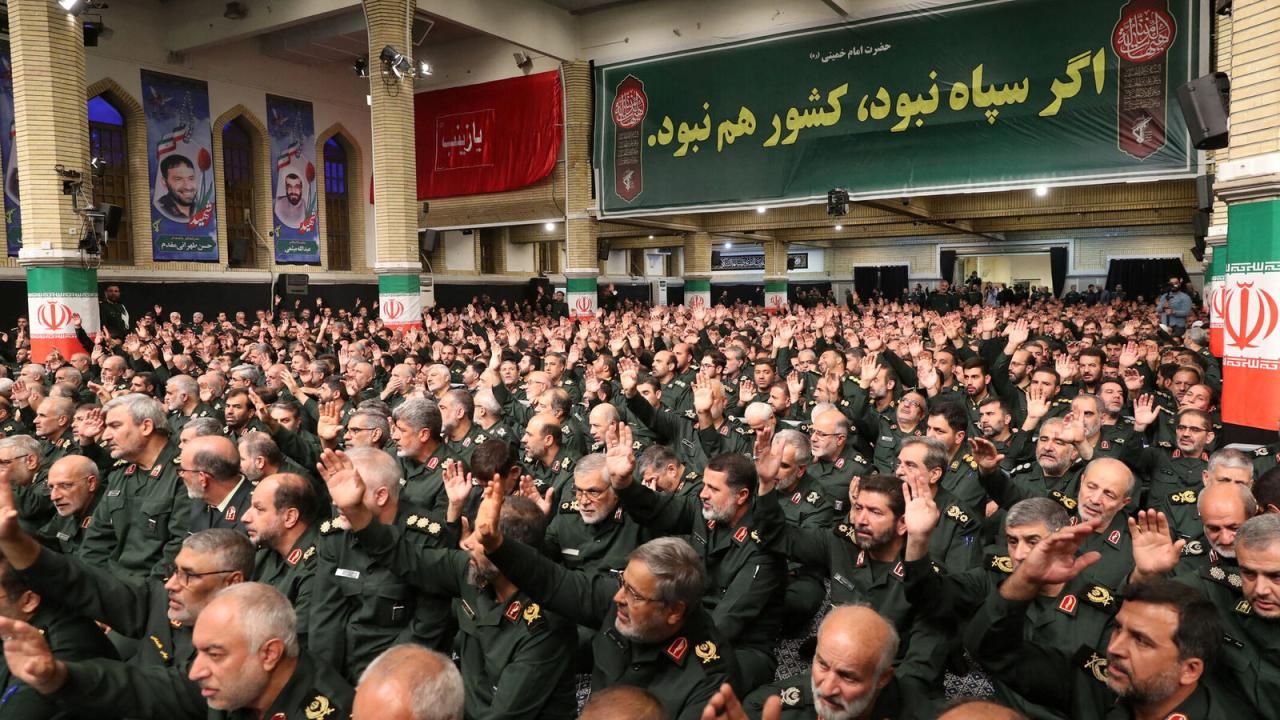
In conclusion, the China-Iran arrests and subsequent export control measures highlight the intricate web of global economic and political relationships. The potential for disruptions to trade, shifts in industry landscapes, and escalating international tensions are significant concerns. This analysis underscores the importance of understanding the historical context, motivations, and potential future trends to fully grasp the impact of these events on a global scale.
Commonly Asked Questions
What are the main reasons behind Iran’s export controls?
Iran’s export controls are often driven by economic and political motivations, including the need to manage resources, safeguard national interests, and potentially counter international sanctions.
How might these arrests influence future export control policies in China?
The arrests could potentially lead to adjustments in China’s export control policies, potentially impacting trade with Iran and other nations. The exact nature of these adjustments remains to be seen, but the incident could create a precedent.
What specific industries might be most affected by these arrests?
Industries heavily reliant on trade between China and Iran, such as technology, energy, and certain manufactured goods, could face disruptions. The extent of the impact will vary depending on the specific products and the enforcement of export controls.
What are the potential long-term impacts on global supply chains?
The disruption to trade routes and the imposition of export controls could create significant ripple effects throughout global supply chains, impacting various sectors and potentially increasing costs.