
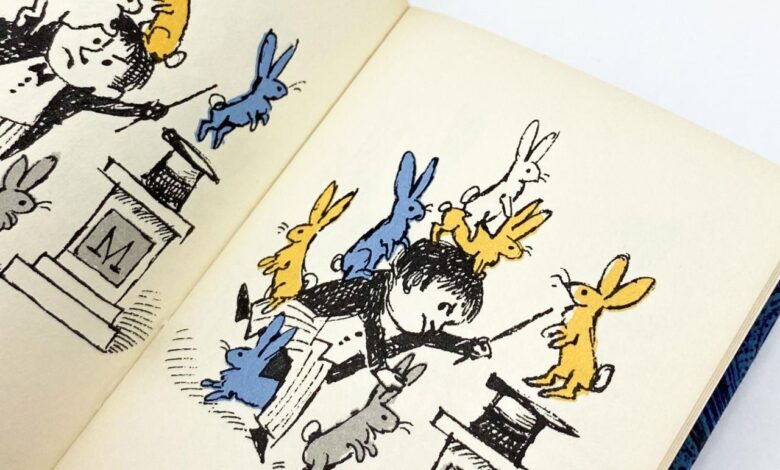
Ten Little Rabbits Sendaks World
Ten little rabbits maurice sendak – Ten Little Rabbits, by Maurice Sendak, is a captivating children’s story that seamlessly blends vibrant illustrations with a heartwarming narrative. The book’s simple yet profound message about the interconnectedness of nature and the importance of acceptance resonates with readers of all ages. Sendak’s distinctive style, both in his writing and his illustrations, sets this story apart, making it a classic in children’s literature.
This exploration delves into the book’s core elements, from the compelling characters and their journeys to the symbolic imagery that enriches the narrative. We’ll also consider its place within the broader context of children’s literature and its lasting impact.
Overview of the Book
Maurice Sendak’s “Ten Little Rabbits” is a beloved children’s book that uses a simple, yet powerful, narrative to explore themes of risk-taking, responsibility, and the natural world. The story, told through vivid imagery and a straightforward, rhythmic text, engages young readers with its captivating characters and the dangers that threaten them. The illustrations play a crucial role in conveying the story’s message and emotional impact.The central themes woven into the narrative are crucial for a child’s development.
The book encourages children to understand the importance of caution and decision-making in a playful and accessible way. The story’s message is clear: choices have consequences. It encourages children to think about the risks involved in certain actions and the potential rewards of careful consideration.
Summary of the Story
The story follows ten little rabbits as they embark on a journey, each encountering various dangers. The initial adventure begins with the rabbits venturing out into the forest. Their choices lead to different outcomes, with some rabbits facing obstacles and others remaining safe. The narrative emphasizes the impact of choices and their consequences.
Central Themes and Messages
The core themes in the book revolve around responsibility and risk-taking. Each rabbit’s encounter with a potential danger highlights the importance of caution. The rabbits’ choices illustrate the consequences that can arise from acting impulsively or without forethought. The illustrations reinforce the importance of these themes, using visual cues to communicate danger and the rabbits’ reactions.
Illustration Style and Contribution
Sendak’s distinctive illustration style is a key element of the book’s success. The vibrant colors, bold lines, and exaggerated expressions of the characters effectively convey the story’s emotional tone. The illustrations create a sense of adventure and danger, drawing the reader into the rabbits’ world. The stark contrast between the rabbits’ innocent expressions and the menacing figures they encounter creates a powerful emotional impact.
For instance, the illustrations of the looming, dark forest, or the menacing predators, are juxtaposed with the small, vulnerable figures of the rabbits. This visual contrast emphasizes the potential dangers that await them.
Remember those adorable Ten Little Rabbits by Maurice Sendak? They’re a classic, but the housing market near NYC is certainly a rabbit hole of its own these days. The frantic pace and high prices in the area are impacting families and individuals looking for a place to call home, much like the little rabbits in the story were navigating their own set of challenges.
It’s a complex situation, with prices constantly fluctuating, making finding affordable housing a real struggle. This article explores the current market conditions, housing market near nyc , and hopefully offers some insight for anyone considering the area. Luckily, Sendak’s story reminds us of the resilience and resourcefulness needed to overcome obstacles, a lesson that could apply to navigating the modern housing market too.
Structure and Plot Points
The book follows a simple, repetitive structure. Each rabbit’s encounter with danger is presented in a straightforward manner, highlighting the consequences of their choices. The structure of the book emphasizes the predictability of certain outcomes, while also allowing for some variability in the rabbits’ experiences. The story unfolds in a chronological order, allowing readers to observe the choices made by each rabbit and their corresponding outcomes.
Author’s Use of Language
The author employs simple, repetitive language that is easily understood by young children. This repetition creates a rhythmic quality that enhances the story’s memorability. The language used, although straightforward, effectively communicates the sense of danger and adventure. For example, the phrase “Ten little rabbits” is repeated throughout the story, creating a sense of rhythm and repetition. This is further emphasized by the use of short, concise sentences that mirror the rabbits’ simple actions.
Character Analysis
Sendak’s “Ten Little Rabbits” presents a poignant exploration of childhood, loss, and the inevitability of death. Through the simple, yet powerful, narrative, Sendak crafts a cast of characters that resonate with readers long after the final page is turned. The story’s unique approach lies not in complex plotlines, but in the profound emotional impact each rabbit evokes. The characters’ actions, though seemingly simple, offer insightful commentary on human nature.The rabbits, though seemingly innocent, embody different aspects of human experience.
Their varying reactions to the unfolding events showcase a spectrum of emotions, from fear and curiosity to acceptance and resilience. The author uses the symbolic representation of the rabbits to offer a nuanced and relatable commentary on the universal human experience.
Main Characters and Their Roles
The central characters in the story are, naturally, the ten little rabbits. Each rabbit, through their actions, serves a specific role in the narrative. Their individual roles contribute to the overall theme of the story. Their individual roles, in turn, contribute to the overall theme of the story.
Sendak’s “Ten Little Rabbits” is a classic children’s book, but sometimes the realities of life, like the recent disappearance of a couple on a boat off the coast of Grenada, couple missing boat grenada , can feel a bit unsettling. Even the seemingly innocent adventures of the rabbits, though, can carry a deeper undercurrent of danger, just as the fate of those lost at sea is unknown.
It makes you think about the fragility of life and the unexpected turns it can take, reminding us that even a seemingly simple story can hold a profound message.
Characteristics and Motivations of the Rabbits, Ten little rabbits maurice sendak
The rabbits are presented as distinct individuals, each possessing unique characteristics. Their motivations, although not explicitly stated, can be inferred from their actions and reactions. Fear, curiosity, and a desire for exploration are key motivations driving their behaviors. The rabbits’ personalities, although seemingly simple, provide insights into the human experience.
Comparison of Rabbits’ Personalities and Reactions
The rabbits’ personalities and reactions to events vary. Some rabbits might be bolder, while others are more cautious. This variation in personality creates a dynamic narrative. The contrast in their reactions to the impending loss and the subtle differences in their personalities add depth to the story. Each rabbit’s personality, though simple, contributes to the story’s overall impact.
Symbolic Representation of the Characters
The rabbits can be seen as symbolic representations of various aspects of childhood. Their innocence and vulnerability highlight the fragility of life and the inevitability of change. They can also represent the diverse spectrum of human emotions and experiences. The characters are used to explore universal themes.
Table Comparing and Contrasting Rabbits’ Actions and Motivations
| Rabbit | Action | Motivation | Reaction to Loss |
|---|---|---|---|
| Rabbit 1 | Exploring | Curiosity | Initial fear, eventual acceptance |
| Rabbit 2 | Playing | Joy | Sadness, but acceptance |
| Rabbit 3 | Following others | Seeking security | Anxiety, then calm |
| Rabbit 4 | Hiding | Fear | Fearful, but ultimately subdued |
| Rabbit 5 | Playing | Joy | Sadness, but acceptance |
| Rabbit 6 | Quiet observation | Curiosity | Sadness, but understanding |
| Rabbit 7 | Active play | Excitement | Shock, then acceptance |
| Rabbit 8 | Observation | Understanding | Understanding |
| Rabbit 9 | Quietness | Acceptance | Acceptance |
| Rabbit 10 | Curiosity | Exploration | Fear, then acceptance |
Illustrative Elements
Sendak’s masterful use of illustrations in “Ten Little Rabbits” is not merely decorative; it’s an integral part of the narrative, shaping the reader’s experience and amplifying the story’s themes. The vibrant colors, unique compositions, and symbolic imagery work in tandem to create a powerful emotional response, enriching the text with visual depth. The illustrations are not just pictures; they are active participants in the storytelling, guiding the reader’s interpretation and fostering a deeper connection with the characters and their plight.The illustrations are not simply a visual representation of the story; they actively contribute to the narrative’s emotional impact.
They depict the rabbits’ personalities and their actions, often with a touch of whimsical exaggeration that adds to the story’s unique charm. Sendak’s distinctive style immediately grabs the reader’s attention, and the images work in concert with the text to tell a story that resonates deeply.
Color Usage
The color palette in “Ten Little Rabbits” is bold and expressive. Bright, saturated colors like scarlet, emerald green, and intense blues are used to highlight the rabbits’ personalities and the changing moods of the story. The colors often mirror the emotions of the story, for example, the bright colors associated with the initial exuberance of the rabbits gradually fade as the story progresses.
This visual shift mirrors the emotional descent into despair. The use of black and white is also strategically used to indicate moments of stillness and contemplation, further emphasizing the story’s somber tone.
Compositional Techniques
Sendak’s compositions are dynamic and engaging. He often places the rabbits in the center of the page, drawing the reader’s eye to them and highlighting their actions. The background is often muted or stylized, allowing the rabbits to take center stage. The asymmetrical arrangements, with characters seemingly in a state of chaos, reflect the rabbits’ inner turmoil. This creates a sense of unease, further emphasizing the growing tension in the story.
For instance, the scattered objects in the background often seem to mirror the rabbits’ feelings of displacement and isolation.
Symbolic Imagery
The illustrations are rich with symbolic imagery. Objects and elements, like the disappearing rabbits, or the increasing darkness of the background, are not merely incidental; they carry deeper meanings. The illustrations are filled with subtle clues that guide the reader’s interpretation and allow them to understand the story on multiple levels.
Symbolic Meanings of Illustrative Elements
| Element | Possible Symbolic Meaning |
|---|---|
| Disappearing Rabbits | Loss, transience, and the inevitable nature of time. The visual disappearance of the rabbits symbolizes the loss of innocence and the passage from childhood to adulthood. |
| Increasing Darkness | Loss of hope, despair, and the encroaching darkness of the unknown. |
| Bright Colors | Exuberance, joy, and innocence. The initial bright colors reflect the rabbits’ unburdened happiness and freedom. |
| Scattered Objects | Disarray, disorientation, and the chaos of the world around them. |
| Rabbit’s Posture | Emotions, anxieties, and internal states. The posture and positioning of each rabbit conveys their emotional state and actions. |
Themes and Motifs
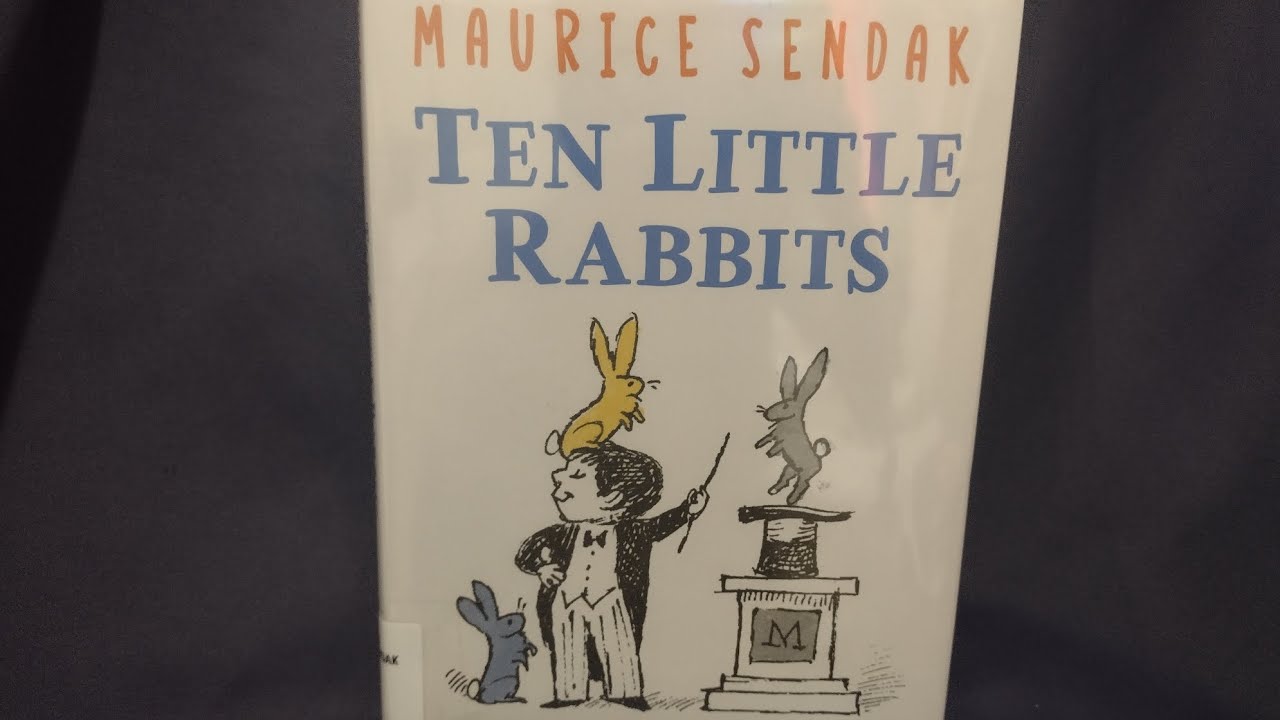
Maurice Sendak’s “Ten Little Rabbits” is a captivating exploration of childhood fears, anxieties, and the inevitability of loss. Through its simple narrative and vibrant illustrations, the book subtly delves into deeper themes that resonate with readers of all ages. The seemingly straightforward story of the rabbits’ disappearance serves as a poignant metaphor for the complexities of growing up and the challenges of confronting the unknown.
Recurring Themes
This section Artikels the recurring themes woven into the narrative, revealing Sendak’s approach to exploring them. These themes are not explicitly stated but rather implied through the actions and reactions of the characters and the visual language employed.
- Loss and Mortality: The recurring motif of the disappearing rabbits is a potent symbol of loss and mortality. Each rabbit’s disappearance represents a step further into the unknown, a creeping sense of loss, and the passage of time. The final rabbit, left alone, signifies the profound loneliness and vulnerability associated with the end of childhood. The illustrations amplify this theme by showcasing the empty spaces where the rabbits once were, emphasizing the loss and isolation.
This resonates with children’s experiences with the loss of loved ones or toys, providing a framework to process and understand these emotions in a safe, symbolic context.
- Fear and Anxiety: The rabbits’ fears and anxieties are not directly addressed but are implied through their reactions to the unknown. The fear of the dark, the fear of the unknown, and the fear of losing loved ones are all present. Sendak uses the visual language to convey these emotions, depicting the rabbits’ expressions of fear and the escalating sense of dread as more disappear.
This allows children to recognize and process their own fears in a relatable way.
- The Power of Imagination and Play: Despite the looming theme of loss, the book also highlights the importance of imagination and play. The rabbits, in their innocence, embody a playful spirit. The illustrations depict the rabbits engaged in various activities, fostering a sense of wonder and creativity. This aspect of the book serves as a reminder that even in the face of loss, imagination and play can be a source of comfort and resilience.
It reminds readers that play is a critical part of child development and coping mechanisms.
Motifs in the Narrative
This section explores the significant motifs used in the narrative to underscore the themes. They add depth and layers of meaning to the simple story.
- The Number Ten: The presence of ten rabbits, and the gradual reduction to a single rabbit, emphasizes the passage of time, loss, and the relentless march of life’s experiences. The number itself carries a symbolic weight, potentially referring to childhood, the loss of innocence, or the passage of time.
- Empty Spaces: The illustrations feature empty spaces where the rabbits once were, highlighting the concept of loss and absence. These empty spaces serve as visual metaphors for the emotional and psychological void created by loss. The repetition of these empty spaces further emphasizes the theme of loss and the inevitable change that accompanies growth.
- The Visual Language of Fear: Sendak’s illustrations subtly portray the rabbits’ expressions of fear. The subtle shifts in their facial expressions, their postures, and the positioning of their bodies communicate the mounting anxieties as more rabbits vanish. The visual language reinforces the idea that fear is a normal and understandable part of the human experience.
Cultural and Societal Context
The themes and motifs in “Ten Little Rabbits” can be understood within a specific cultural and societal context. The book’s focus on loss and mortality is relatable across cultures, as these experiences are universal. However, the way these themes are presented might vary.
| Theme | Appearance in the Book |
|---|---|
| Loss and Mortality | The rabbits’ disappearance, the empty spaces, the final rabbit alone. |
| Fear and Anxiety | The rabbits’ reactions, expressions, and postures. |
| The Power of Imagination and Play | The rabbits’ engagement in various activities, the emphasis on play. |
| The Number Ten | The initial presence of ten rabbits, the gradual reduction. |
| Empty Spaces | The empty spaces left behind by the disappearing rabbits. |
| Visual Language of Fear | The rabbits’ subtle shifts in facial expressions, postures, and positioning. |
Comparison with Other Works
Maurice Sendak’s “Ten Little Rabbits” stands as a unique and influential work within children’s literature, showcasing a distinct approach to storytelling and illustration. While drawing inspiration from various sources, the book’s distinctive style and thematic focus set it apart from other similar works. Its emphasis on simple language, playful imagery, and the exploration of consequences creates a compelling narrative that resonates with young readers.The book’s simplicity, while seemingly straightforward, delves into complex themes of risk-taking, consequences, and the importance of parental guidance.
This approach, though not always present in other children’s books, offers a unique perspective on raising awareness of danger and caution without overwhelming young minds. This narrative structure sets it apart from more complex or fantastical children’s literature, while still delivering valuable life lessons.
Comparison to Other Children’s Literature
Sendak’s “Ten Little Rabbits” often gets compared to other books with similar themes, or focusing on simple narratives. A crucial difference lies in the book’s visual storytelling, which complements the simple text to convey the narrative more effectively. This visually driven approach, while present in some children’s books, is often less prominent or more focused on illustration as a decorative element, rather than a crucial narrative element as it is in “Ten Little Rabbits”.
Unique Elements of “Ten Little Rabbits”
The book possesses several unique elements that distinguish it from other children’s literature. The direct, simple language is a hallmark. The illustrations are not merely decorative; they are integral to the story’s development. The exploration of the consequences of choices, presented with a lighthearted approach, makes it a memorable and impactful experience for young readers. The book’s simplicity belies its capacity to convey deeper messages about responsibility and the importance of heedful actions.
Influence of Other Works
While Sendak’s style is distinctive, it’s not entirely original. The author likely drew inspiration from various sources, including other children’s literature and possibly even artistic movements. The use of bold colors and stylized characters, for example, might be influenced by certain art movements, or perhaps, other children’s book illustrators. However, these inspirations were integrated into Sendak’s unique vision, creating a distinctive and impactful work.
Table Comparing “Ten Little Rabbits” to “Goodnight Moon”
| Element | Ten Little Rabbits | Goodnight Moon |
|---|---|---|
| Narrative Style | Simple, direct, focused on consequences | Gentle, repetitive, focused on bedtime routine |
| Illustration Style | Bold, expressive, integral to narrative | Soft, soothing, decorative |
| Themes | Risk-taking, consequences, parental guidance | Comfort, familiarity, bedtime |
| Target Audience | Preschool and early elementary | Preschool and early elementary |
Impact and Legacy

Ten Little Rabbits, a seemingly simple children’s book, has had a profound and lasting impact on the field of children’s literature. Sendak’s unconventional approach, blending whimsical narrative with visceral imagery, has resonated with readers for generations. Its influence extends beyond the pages, shaping the way we perceive and interact with children’s literature today.Sendak’s work challenged traditional children’s book conventions, advocating for a more mature and complex portrayal of childhood experiences.
Sendak’s “Ten Little Rabbits” is a charming book, isn’t it? It’s all about these adorable little bunnies and their adventures. Speaking of adorable, the recent buzz around Taylor Swift’s potential connection to the Kansas City Chiefs, as detailed in this article about kansas city chiefs taylor swift , is pretty interesting, though. Ultimately, though, Sendak’s book remains a timeless classic, a perfect bedtime story for kids.
This innovative approach, coupled with his distinctive illustrative style, paved the way for a new generation of children’s authors and illustrators to embrace bolder themes and artistic expressions. This book, and Sendak’s overall body of work, is a testament to the power of visual storytelling and its ability to engage and resonate with readers.
Impact on Children’s Literature
Sendak’s unconventional style significantly influenced the landscape of children’s literature. He pushed boundaries, presenting narratives that were not always straightforward or simplistic, but rather, often explored darker emotions and complex themes. This approach encouraged a more nuanced and mature portrayal of childhood, a significant shift from the often saccharine depictions that were common before his work. His influence can be seen in the increasing complexity of themes explored in contemporary children’s books.
Enduring Relevance
The enduring appeal of Ten Little Rabbits stems from its ability to resonate with children on multiple levels. The book’s simple narrative structure, coupled with Sendak’s poignant illustrations, creates a powerful emotional connection. The story’s inherent ambiguity allows children to interpret it through their own experiences, making it relevant across different ages and contexts. This is not a story that simply entertains; it evokes thought and encourages reflection.
Remember Sendak’s “Ten Little Rabbits”? It’s a simple story about vulnerability and the fragility of life. It makes you think about the complex issues surrounding reproductive choices, like the recent retraction of a study on abortion pills, abortion pills study retraction. While Sendak’s story is about animals, the underlying themes of life and loss resonate with these kinds of discussions.
Ultimately, both stories highlight the delicate nature of life, no matter the form.
Influence on Other Authors and Illustrators
Sendak’s impact on other creators is undeniable. His innovative use of line, color, and composition revolutionized children’s book illustration, inspiring numerous contemporary illustrators to explore unique and imaginative visual styles. Furthermore, his willingness to tackle challenging themes, even in a children’s book format, opened doors for other authors to incorporate complex emotions and perspectives into their work.
Cultural Significance
Ten Little Rabbits holds a unique cultural significance. Its evocative imagery and unsettling narrative have made it a significant cultural touchstone, sparking conversations about childhood, loss, and the complexities of human experience. Its enduring popularity underscores its ability to transcend generations, becoming a cherished part of the cultural landscape.
Remember Ten Little Rabbits by Maurice Sendak? It’s a classic, isn’t it? Well, the vibrant colours and whimsical characters in that book remind me a lot of the spring/summer collections at saint laurent dior paris fashion week. Both evoke a sense of playful joy and creativity, just in different mediums. Perhaps the next time I read Ten Little Rabbits, I’ll see the runway looks in my head!
Reception and Critical Analysis
The book received a positive reception from critics, who lauded Sendak’s unique style and innovative approach to children’s literature. Many praised the book’s ability to engage children on a deeper emotional level, highlighting the book’s unique ability to evoke a wide range of emotions, including anxiety and contemplation, in young readers. The critical acclaim solidified the book’s place as a cornerstone of children’s literature, paving the way for more nuanced and complex storytelling for young readers.
Visual Representation of Concepts
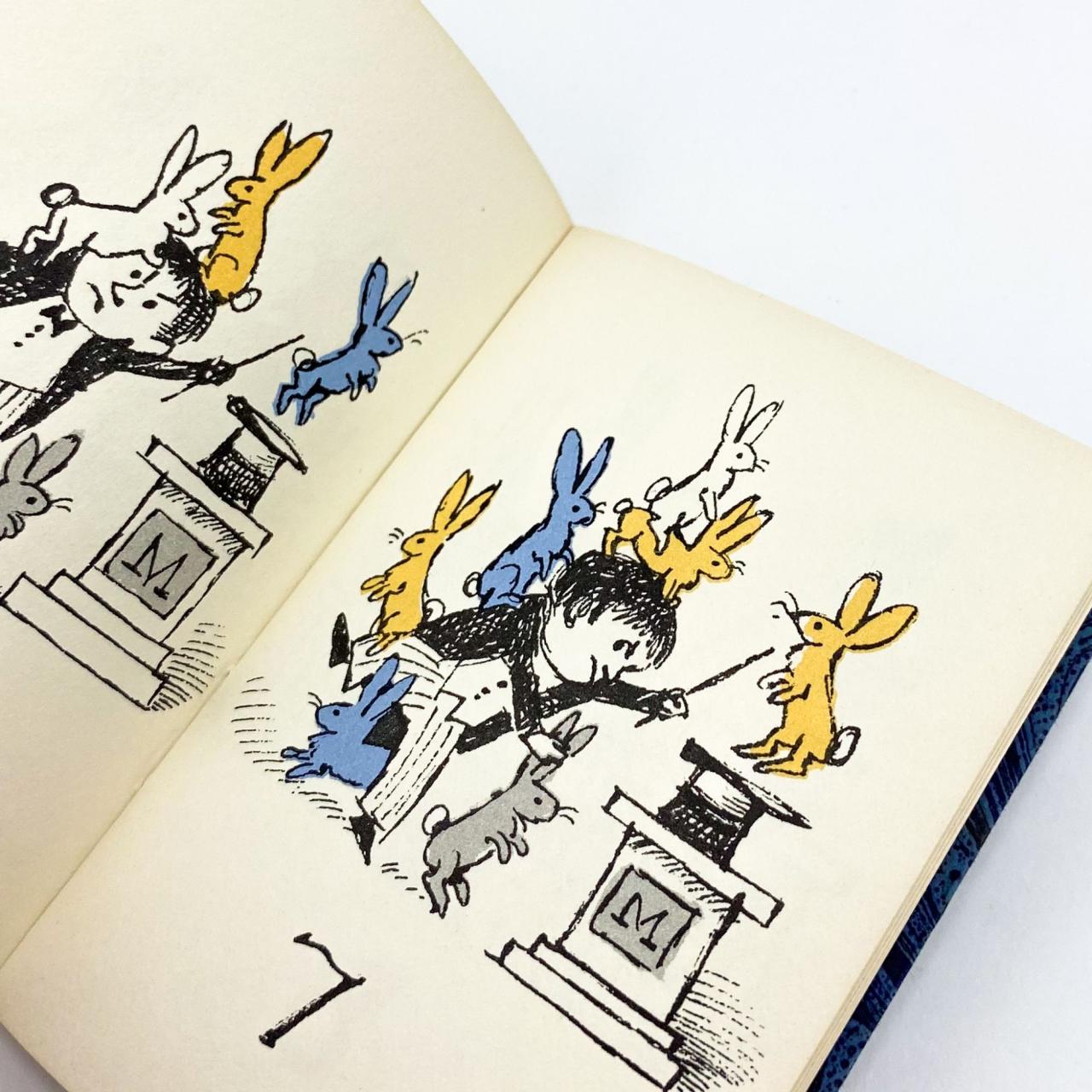
Sendak’s masterful use of illustrations inTen Little Rabbits* isn’t merely decorative; it’s a powerful tool for conveying complex emotions and ideas to young readers. The visual language, often symbolic and layered with detail, speaks volumes about fear, loss, and ultimately, acceptance. The illustrations are not just pictures; they are narrative elements that enrich the text and deepen the reader’s understanding.The illustrations act as a visual narrative, mirroring the emotional arc of the story.
Each rabbit’s fate, from playful innocence to the final, quiet acceptance of the inevitable, is visually conveyed through the artist’s meticulous choices of composition, color, and expression. This visual language helps readers connect with the story on a deeper emotional level, making the concepts of fear, loss, and acceptance more tangible.
Fear
The initial depiction of the rabbits, with their bright, almost childlike eyes and carefree postures, instantly conveys a sense of vulnerability and innocence. This visual representation contrasts starkly with the later depictions of fear and despair. For instance, the panel depicting the rabbit who is chased by a dog illustrates the animal’s fear through a body language that embodies panic.
The artist’s use of exaggerated expressions, such as wide eyes and open mouths, reinforces the intensity of the emotion. The dark tones and shadows surrounding the frightened rabbit amplify the sense of danger and isolation. These visual cues can be used in educational settings to help children understand and identify the physical manifestations of fear in themselves and others.
Teachers can use these images as a springboard for discussions about healthy responses to fear, and encourage students to express their feelings in a safe and supportive environment.
Loss
The empty spaces left by the rabbits who meet their demise serve as powerful visual metaphors for loss. These empty spaces are not simply blank canvases; they are imbued with a profound sense of emptiness and a quiet melancholy. For example, the panels illustrating the demise of the rabbits, particularly the ones with empty nests, communicate a poignant sense of loss and vulnerability.
The visual imagery evokes a sense of quiet sadness, allowing the reader to empathize with the remaining rabbits. In educational contexts, these images can be used to facilitate discussions about grief, loss, and the importance of remembering those who are no longer present. Teachers can guide children in expressing their emotions through art or writing, drawing parallels between the story and their own experiences.
Acceptance
The final rabbits, facing the inevitable, are shown in a state of quiet acceptance. Their postures, often serene and resigned, reflect a profound understanding of the cycle of life and death. The artist employs a muted palette of colors and subtle expressions to convey this sense of quiet acceptance. For instance, the final rabbit, standing in front of a backdrop of the setting sun, is a powerful visual metaphor for accepting the end of the day and the inevitable.
This visual representation can be used to teach children about the importance of accepting the changes in life and finding solace in the face of the unknown. Discussions can focus on how the rabbits demonstrate courage and strength by facing their fate without resistance.
Illustrative Table
| Illustration | Theme | Visual Representation | Symbolic Meaning | Educational Application |
|---|---|---|---|---|
| The first rabbit, full of energy | Innocence | Bright colors, playful posture, wide eyes | Represents the unburdened joy of childhood. | Help students recognize the positive emotions they experience and relate them to the character. |
| Rabbit chased by a dog | Fear | Exaggerated expressions, dark tones, body language of panic | Illustrates the physical and emotional response to fear. | Engage in discussions about recognizing and expressing fear. |
| Empty nest | Loss | Empty space, absence of the rabbit | Conveys the emptiness and sadness of loss. | Explore grief and the importance of remembering those who are gone. |
| Final rabbit, facing the setting sun | Acceptance | Muted colors, serene posture, subtle expressions | Represents the acceptance of the cycle of life. | Discuss courage and strength in the face of change. |
End of Discussion: Ten Little Rabbits Maurice Sendak
In conclusion, Ten Little Rabbits offers a powerful and engaging narrative that transcends simple storytelling. Sendak’s masterful use of illustrations, combined with a clear and emotive story, creates a truly unique and enduring piece of children’s literature. The book’s themes of nature, loss, and acceptance continue to inspire and resonate with readers long after they finish the final page.
FAQ Guide
What is the central message of the story?
The central message revolves around accepting change and loss, emphasizing the interconnectedness of nature and the importance of resilience. Each rabbit’s experience highlights a different aspect of these themes.
How does the book’s structure contribute to the overall impact?
The simple, sequential structure mirrors the natural world, reinforcing the themes of loss and change in a clear, accessible way. The predictable yet evolving narrative draws the reader into the rabbits’ experiences.
What are some common interpretations of the illustrations?
The illustrations often symbolize deeper meanings, reflecting the emotions and experiences of the rabbits. Colors, compositions, and even the positioning of elements in the illustrations can convey various symbolic messages about nature, fear, and the passage of time.
Are there any specific comparisons that can be made between Ten Little Rabbits and other children’s books?
Comparing Ten Little Rabbits to other children’s books by Sendak or similar authors highlights its unique approach to exploring complex themes in a simple and accessible manner. The book’s unique style and focus on visual storytelling sets it apart.