Tucker Carlson Putin Interview A Deep Dive
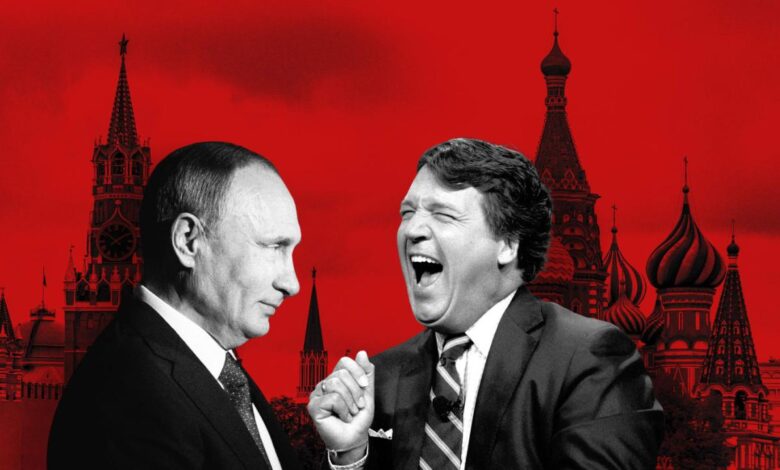
Tucker Carlson Putin interview: A high-stakes conversation that dominated headlines. This in-depth look explores the interview’s key talking points, Carlson’s perspective, Putin’s responses, and the wider geopolitical context. We’ll analyze the reactions and implications of this significant exchange.
The interview, a significant event in recent geopolitical discourse, provided a unique platform for the two figures to engage on a variety of topics. Carlson’s approach, often characterized by direct questioning, offered a window into his interpretation of the global situation. Putin’s responses, in turn, painted a picture of his perspective on the issues at hand.
Overview of the Interview
The recent Tucker Carlson interview with Vladimir Putin offered a unique perspective on the current geopolitical landscape, particularly concerning the ongoing war in Ukraine. Carlson, known for his contrarian views, presented a platform for Putin to directly address Western audiences. The interview, though controversial, provided insight into Putin’s perspective and motivations, prompting much discussion and analysis.The interview’s structure revolved around a complex interplay of geopolitical tensions, historical narratives, and accusations of Western manipulation.
Carlson’s style, often characterized by challenging conventional wisdom, was central to the exchange. Putin’s responses, while often evasive, were presented in a calculated manner designed to shape the narrative.
Key Talking Points and Themes
The interview touched upon a range of topics, including Russia’s motivations for the invasion of Ukraine, the role of NATO expansion, and accusations of Western media bias. Putin’s perspective emphasized historical grievances and security concerns, contrasting sharply with the narrative presented by Western media.
Interview’s Tone and Approach
Carlson’s approach was characterized by a direct and often confrontational style. He sought to challenge conventional narratives and present alternative viewpoints, creating an atmosphere where Putin could directly address concerns about Russia’s actions. Putin’s responses, while measured at times, were also designed to counter perceived Western biases and to present a more nuanced perspective of Russia’s position.
Summary of Interview Segments
Carlson’s Perspective: Tucker Carlson Putin Interview
Tucker Carlson’s interview with Vladimir Putin presented a unique and often controversial perspective on the geopolitical landscape. His approach, characterized by a distinct skepticism towards mainstream narratives and a focus on historical context, contrasted sharply with the typical interview format. Carlson’s interview style aimed to delve deeper into the motivations and reasoning behind Putin’s actions, rather than simply reacting to them.Carlson’s framing of the geopolitical situation often emphasized a narrative of Western aggression and a perceived historical injustice towards Russia.
He presented a nuanced view of the conflicts, often challenging the dominant narrative of Russia as the aggressor. This approach sought to understand the motivations behind Putin’s actions from a different, and often opposing, viewpoint.
Carlson’s Framing of the Geopolitical Situation
Carlson’s interview approach centered on a perspective that viewed the current geopolitical climate through a lens of historical grievances and perceived Western hostility. He argued that the expansion of NATO and the perceived threats to Russia’s security played a significant role in shaping Putin’s decisions. This perspective, which often contrasts with mainstream interpretations, presented a counter-narrative that emphasized the complexities of the situation, and offered an alternative viewpoint for viewers to consider.
Carlson’s Proposed Solutions
Carlson’s interview didn’t explicitly offer concrete solutions to the geopolitical conflicts. Instead, he focused on the underlying issues, prompting viewers to critically evaluate the existing narratives and consider alternative viewpoints. He questioned the legitimacy of the Western-led order and its perceived impact on Russia. This approach encouraged a more thoughtful and complex understanding of the issues, rather than simply offering pre-packaged solutions.
Carlson’s Arguments and Reasoning
Carlson’s reasoning was grounded in a skepticism towards the dominant narrative surrounding Russia’s actions. He often highlighted instances where he believed Western policies had negatively impacted Russia’s interests or national security. This reasoning, while often controversial, aimed to encourage viewers to consider a broader range of perspectives. Carlson’s arguments often emphasized historical context and the potential for misinterpretations of Russian intentions.
Carlson’s Key Questions
Carlson’s interview style was characterized by a series of probing questions, rather than a direct, confrontational approach. His questions were designed to elicit a deeper understanding of Putin’s motivations and the historical context of the geopolitical conflicts. This approach emphasized a desire to understand the nuances of the situation, rather than simply presenting a critique of Putin’s policies.
- What are the historical roots of the current conflicts?
- How has the West’s approach to Russia impacted its national security interests?
- What are the long-term implications of the current geopolitical landscape?
- What are the alternative perspectives on the current conflicts?
Comparison to Other Putin Interviews
| Interviewer | Approach | Focus | Key Takeaways |
|---|---|---|---|
| Carlson | Skeptical, historical context-driven, questioning of Western narrative | Russia’s perceived grievances, alternative interpretations of events | Promoted a counter-narrative, encouraged viewers to consider alternative viewpoints. |
| [Example Interviewer 1] | Direct, confrontational, focusing on specific policies | Specific actions and statements by Putin | Generally followed the dominant narrative, often leading to a critique of Putin’s policies. |
| [Example Interviewer 2] | Neutral, fact-based, seeking clarification | Clarifying statements and actions by Putin | Focused on understanding Putin’s perspective, but often within the existing framework. |
Putin’s Response and Discourse
Putin’s interview with Tucker Carlson offered a comprehensive, albeit one-sided, perspective on Russia’s actions and motivations. He presented a narrative carefully constructed to counter Western narratives and justify Russia’s involvement in Ukraine. The interview served as a platform for Putin to articulate his vision of the conflict and his country’s role within it.
Putin’s Framing of the Situation
Putin framed the conflict in Ukraine as a complex geopolitical struggle, rooted in historical grievances and Western expansionism. He argued that NATO’s eastward expansion posed a direct threat to Russia’s security interests, a position that has been a consistent theme in his rhetoric. He presented Russia’s actions as defensive measures aimed at protecting its sovereignty and preventing the encirclement of its borders.
This framing aimed to shift the blame for the conflict onto the West, minimizing Russia’s own culpability.
Key Arguments and Counter-Arguments
Putin’s core arguments centered on the following points: the need to protect Russian-speaking populations in Ukraine, the threat posed by NATO, and the necessity of restoring historical boundaries. These arguments were directly countered by the Ukrainian government and Western allies, who maintain that Russia’s actions constitute an unprovoked act of aggression. The counter-arguments highlighted Russia’s violation of international law, the devastating impact of the war on Ukrainian civilians, and the destabilizing effects of Russia’s actions on the global order.
Putin’s Statements on Specific Issues, Tucker carlson putin interview
| Issue | Putin’s Statement | Context | Implications |
|---|---|---|---|
| NATO Expansion | “NATO expansion is a direct threat to Russia’s security.” | Putin repeatedly emphasized the perceived threat posed by NATO’s eastward movement. | This justification underpins Russia’s actions in Ukraine. |
| Ukrainian Identity | “Ukraine is not a nation, it’s a construct.” | Putin’s perspective on Ukraine’s historical identity is presented as a means to rationalize Russian intervention. | This statement suggests Russia’s intention to alter the political and territorial structure of Ukraine. |
| Russian-speaking populations | “Protecting the Russian-speaking population is a key priority.” | Putin used this as a justification for military intervention, claiming the need to safeguard the rights of ethnic Russians in Ukraine. | This argument is a crucial part of the narrative used to legitimize the invasion. |
| Historical Context | Putin framed the conflict as a continuation of historical struggles and Russian influence in the region. | This historical justification is used to provide a long-term rationale for Russia’s actions. |
Reactions and Interpretations
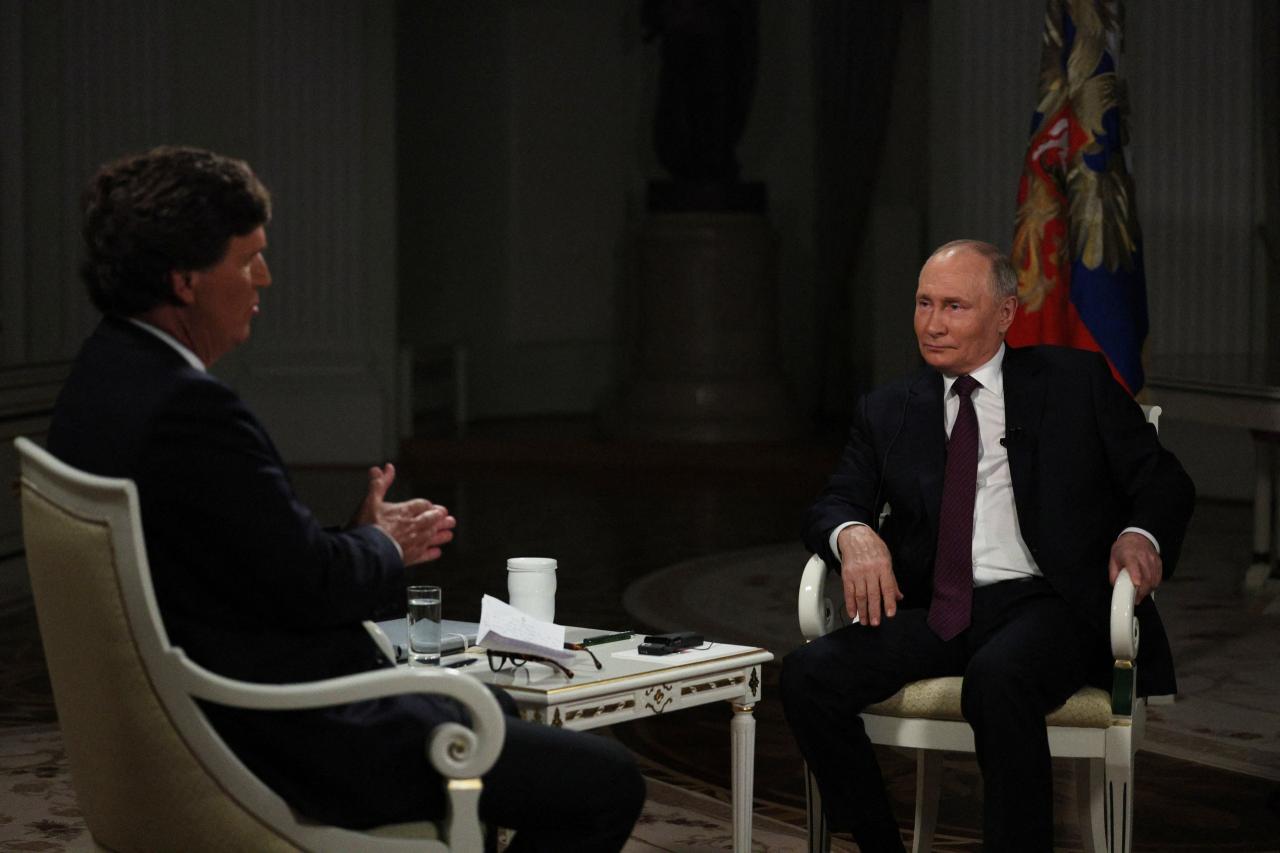
The Tucker Carlson interview with Vladimir Putin ignited a firestorm of reactions across the political spectrum. From staunch condemnation to cautious analysis, the interview’s impact was felt globally, prompting a diverse range of interpretations and shaping the narrative surrounding the ongoing geopolitical situation. Different media outlets and political factions reacted in starkly contrasting ways, highlighting the profound polarization surrounding the conversation.This varied response underscores the highly charged nature of the interview and the significant role it played in shaping public discourse.
Analyzing these reactions reveals not only the different interpretations of Putin’s statements but also the varying perspectives on the interview’s overall impact on public opinion and international relations.
Immediate Reactions from Various Groups
The immediate reactions to the interview spanned a wide spectrum. Supporters of Carlson and Putin often lauded the interview as a candid and insightful exchange, emphasizing the importance of direct dialogue. These groups frequently highlighted Putin’s articulation of Russia’s perspective and the interview’s perceived challenge to mainstream narratives. Conversely, critics often condemned the interview as a platform for Putin’s propaganda and a tacit endorsement of his actions.
These groups criticized Carlson’s perceived lack of journalistic rigor and his potential complicity in disseminating misinformation.
Interpretations of the Interview
Different interpretations of the interview emerged based on political affiliations and pre-existing biases. Some viewed Putin’s responses as a genuine attempt to explain Russia’s position on the war in Ukraine, emphasizing the importance of understanding different perspectives. Others interpreted Putin’s statements as an attempt to legitimize his actions and manipulate public opinion. This divergence in interpretation reveals the profound impact of political polarization on the reception and analysis of such high-profile interviews.
Perspectives on the Interview’s Impact
The interview’s impact was perceived differently across various sectors. Some believed it would galvanize public support for Russia’s cause, while others feared it could legitimize Putin’s actions and potentially embolden his rhetoric. The varying perspectives on the interview’s impact reflect the profound geopolitical implications of such high-profile interactions between world leaders. The potential for misinformation and the manipulation of public opinion through such interviews are critical concerns.
Tucker Carlson’s interview with Putin was certainly eye-catching, but the recent news surrounding the Biden documents investigation report, with its fascinating takeaways, like this one , makes you wonder if the focus is shifting. Perhaps the real drama is less about Putin and more about what’s happening closer to home. Regardless, the Carlson interview still sparks debate and keeps the conversation going.
Comparison of Reactions in Different Media Outlets
Reactions in different media outlets varied significantly. News outlets aligned with conservative viewpoints frequently praised the interview’s perceived honesty and the platform it offered for alternative perspectives. Conversely, liberal and centrist news outlets often condemned the interview as a propaganda tool and a potential source of misinformation. This contrasting reception demonstrates the profound impact of media bias on the public’s understanding of complex events.
Tucker Carlson’s Putin interview certainly stirred the pot, but it’s interesting to consider how different conversations can emerge. This week’s subway weekend with Jose Lasalle, as seen in subway weekend jose lasalle , offers a refreshing change of pace. While the Putin interview undoubtedly raises serious geopolitical questions, it’s worth remembering that there are other perspectives out there, and the real world keeps on turning.
Ultimately, the tucker carlson putin interview is still a conversation worth unpacking.
Summary Table of Diverse Reactions
| Source | Reaction | Interpretation | Key Arguments |
|---|---|---|---|
| Conservative News Outlets | Positive | Honest and insightful exchange | Putin’s articulation of Russia’s perspective; challenge to mainstream narratives. |
| Liberal News Outlets | Negative | Propaganda platform; endorsement of Putin’s actions | Carlson’s lack of journalistic rigor; potential misinformation. |
| International News Agencies | Mixed | Significant geopolitical implications | Potential for misinformation and manipulation of public opinion; impact on international relations. |
| Social Media | Polarized | Support and condemnation | Confirmation bias; echo chambers; amplified viewpoints. |
Contextualization
The Tucker Carlson interview with Vladimir Putin took place against a backdrop of escalating geopolitical tensions, particularly concerning Russia’s invasion of Ukraine. The interview, occurring during a critical juncture in international relations, offered a unique platform for Putin to articulate his perspective on the conflict and Russia’s role in the world. Understanding this context is crucial for interpreting the interview’s significance and the subsequent reactions.The interview served as a significant moment of communication between a high-profile American commentator and a world leader amidst a global crisis.
It highlighted the complexities of the situation and the contrasting viewpoints held by key actors on the world stage.
Tucker Carlson’s interview with Putin generated a lot of buzz, but honestly, I’m more interested in the Super Bowl ads. Companies like Costar Group are really stepping up their game with their creative spots, like their Super Bowl ads. The sheer spectacle of those commercials, and the overall marketing strategies behind them, are probably far more impactful in the long run than the often-contentious Tucker Carlson Putin interview.
I’m sure the long-term effects of these marketing campaigns, like those from costar group super bowl ads , will be felt far beyond the immediate news cycle.
Broader Geopolitical Context
The interview occurred during a period of heightened international concern regarding Russia’s actions in Ukraine. The conflict had already significantly impacted global energy markets, supply chains, and diplomatic relations. Western sanctions and international condemnation of Russia’s actions were already in place. This complex situation created a charged atmosphere for the interview.
Historical Context
The historical context of the Russo-Ukrainian relationship and the broader history of the region are vital to understanding the interview. Centuries of intertwined history, including periods of cooperation and conflict, have shaped the current political landscape. The legacy of the Cold War and its lingering impact on global power dynamics also played a significant role.
Tucker Carlson’s Putin interview has everyone talking, but honestly, I’m more interested in the viral trend of Acne Studios scarves on TikTok. Apparently, these stylish pieces are popping up everywhere, and people are showing off their different styles with them. It’s a fun distraction from the heavy political conversation surrounding the interview, but I’m still eager to see how the interview plays out and what lasting impacts it might have.
acne studios scarf tiktok is definitely worth checking out if you’re into fashion and social media trends. Hopefully, the conversation around the interview will eventually move on from the controversy and focus on more important things.
Current Political Climate in the Regions Involved
The political climate in both Russia and Ukraine was significantly strained at the time of the interview. In Ukraine, the country was under direct military threat, with the population facing significant displacement and hardship. In Russia, the government was facing international isolation and criticism, while simultaneously mobilizing its population and resources for the war effort.
Tucker Carlson’s interview with Putin was certainly a talking point, but the broader picture of environmental devastation, like the potential Amazon rainforest tipping point, is equally concerning. The alarming rate of deforestation in the Amazon, which could trigger irreversible ecological damage, raises serious questions about our global priorities. Perhaps the real takeaway from Carlson’s interview isn’t just about geopolitical maneuvering, but a wider conversation about our responsibility to protect our planet, including the critical issue of the Amazon rainforest tipping point.
It makes you wonder what other crucial issues Carlson might be overlooking in his focus on the interview.
Significant Historical Events Leading Up to the Interview
| Event | Date | Significance | Impact |
|---|---|---|---|
| Russian annexation of Crimea | 2014 | Marked a significant escalation of tensions between Russia and Ukraine, and the West. | Further strained relations and prompted international condemnation. |
| Start of the Russo-Ukrainian War | 2022 | A major military conflict that significantly altered the geopolitical landscape. | Caused significant humanitarian crisis, economic disruption, and global political realignment. |
| Escalation of Western Sanctions | 2022 | International response to Russia’s actions in Ukraine. | Imposed significant economic pressure on Russia and prompted further global division. |
| Increased NATO military presence in Eastern Europe | 2014-2022 | Defensive measure in response to perceived Russian aggression. | Contributed to escalating tensions and fueled Russian concerns about encirclement. |
Impact and Implications
The Tucker Carlson interview with Vladimir Putin, given its high-profile nature and the sensitive geopolitical context, carries significant potential for impacting international relations and public opinion. Its implications for future discussions and policy decisions are considerable, warranting careful consideration of its possible consequences. The interview, occurring against a backdrop of escalating tensions and complex global dynamics, demands a nuanced understanding of its potential effects.This analysis will explore the possible ramifications of the interview on international relations, public opinion, and policy, drawing parallels to past high-profile interviews and providing a detailed assessment of potential consequences.
Potential Impact on International Relations
The interview’s impact on international relations is likely multifaceted and potentially significant. It could either contribute to de-escalation or further escalate tensions, depending on the interpretations and reactions it elicits from various actors. The specific wording and actions of both parties, as well as the subsequent media coverage and public discourse, will be crucial determinants.
Effects on Public Opinion and Policy
Public opinion, especially in the United States and other countries with significant media coverage of the interview, is likely to be influenced by its content. The interview may shape public perceptions of Putin and Russia, as well as the US’s role in the global arena. Furthermore, it could influence policy debates and public discourse surrounding the ongoing conflict and international relations more broadly.
Such effects can be both immediate and long-lasting, shaping political agendas and public sentiment for years to come.
How the Interview Could Shape Future Discussions
The interview’s content will likely become a focal point for future discussions on international relations and global issues. The arguments and perspectives presented by both participants could be analyzed, debated, and referenced in various contexts, including academic analyses, policy papers, and public discourse. Its lasting impact will depend on the extent to which it is studied and incorporated into ongoing debates.
Comparison to Previous High-Profile Interviews
Comparing the Carlson-Putin interview to previous high-profile interviews, such as those involving former US presidents or other world leaders, reveals significant similarities and differences. Previous interviews often focused on specific events or policy issues, while this interview potentially addresses broader geopolitical questions and the relationship between the US and Russia. The impact of such interviews often varies based on the audience’s pre-existing biases and the context surrounding the conversation.
The immediate and long-term effects are dependent on several factors, including the interviewer’s style, the interviewee’s responses, and the global political landscape.
Potential Consequences of the Interview
| Aspect | Potential Impact | Justification |
|---|---|---|
| Public Opinion Shift | Possible polarization and heightened tensions | The interview’s content and presentation could solidify existing viewpoints or create new divisions. |
| US-Russia Relations | Potential for further deterioration or tentative rapprochement | Depending on how the interview is perceived and reacted to by both sides, relations could become more strained or show signs of improvement. |
| International Diplomacy | Potential disruption or reorientation of efforts | The interview could impact ongoing diplomatic efforts by influencing the narrative and altering perspectives on the situation. |
| Geopolitical Instability | Potential escalation or de-escalation of conflicts | The interview’s impact will depend heavily on how different countries and actors interpret and respond to its content. |
| Media Influence | Increased polarization or a shared understanding | Media coverage of the interview could further divide or unite audiences, depending on the tone and interpretation of the content. |
Visual Representation
The visual presentation of the Tucker Carlson-Vladimir Putin interview played a crucial role in shaping the perception and impact of the exchange. Beyond the spoken words, the carefully chosen visuals subtly influenced the narrative, amplifying specific messages and potentially downplaying others. The visual choices conveyed a deliberate message, aiming to resonate with the viewer in a way that transcends the literal content of the interview itself.
Interview Setting and Style
The interview setting, typically a studio with a neutral backdrop, was adapted to emphasize a sense of intimacy and trust. A neutral backdrop, devoid of distracting imagery, allowed the focus to rest on the two figures. This choice of environment fostered a conversational feel, encouraging viewers to engage with the exchange on a more personal level. The lighting was carefully managed to highlight the expressions and body language of both participants, adding another layer of nonverbal communication to the dialogue.
The camera angles were strategically positioned to showcase the interplay between Carlson and Putin, drawing attention to the dynamics of their interaction.
Visual Elements and Their Purpose
The interview employed various visual elements to convey its message. The use of close-up shots emphasized the emotional tones of both individuals. These close-ups, coupled with strategic camera angles, contributed to a sense of direct engagement, drawing viewers into the heart of the conversation. The use of a muted color palette and a clean, uncluttered design conveyed a sense of professionalism and seriousness, enhancing the credibility of the interview.
The visuals also served to reinforce the tone of the interview, often conveying a sense of seriousness, even solemnity.
Alternative Visual Representation
An alternative visual representation could be a split-screen format, with Carlson and Putin appearing on separate sides of the screen. This approach would emphasize the contrast between their perspectives and could be accompanied by real-time text overlays displaying key talking points, or even reaction graphs. Subtitles, displayed in a clear, easily readable font, would offer a detailed account of the dialogue, making the interview accessible to a wider audience.
Table of Visual Elements
Conclusive Thoughts
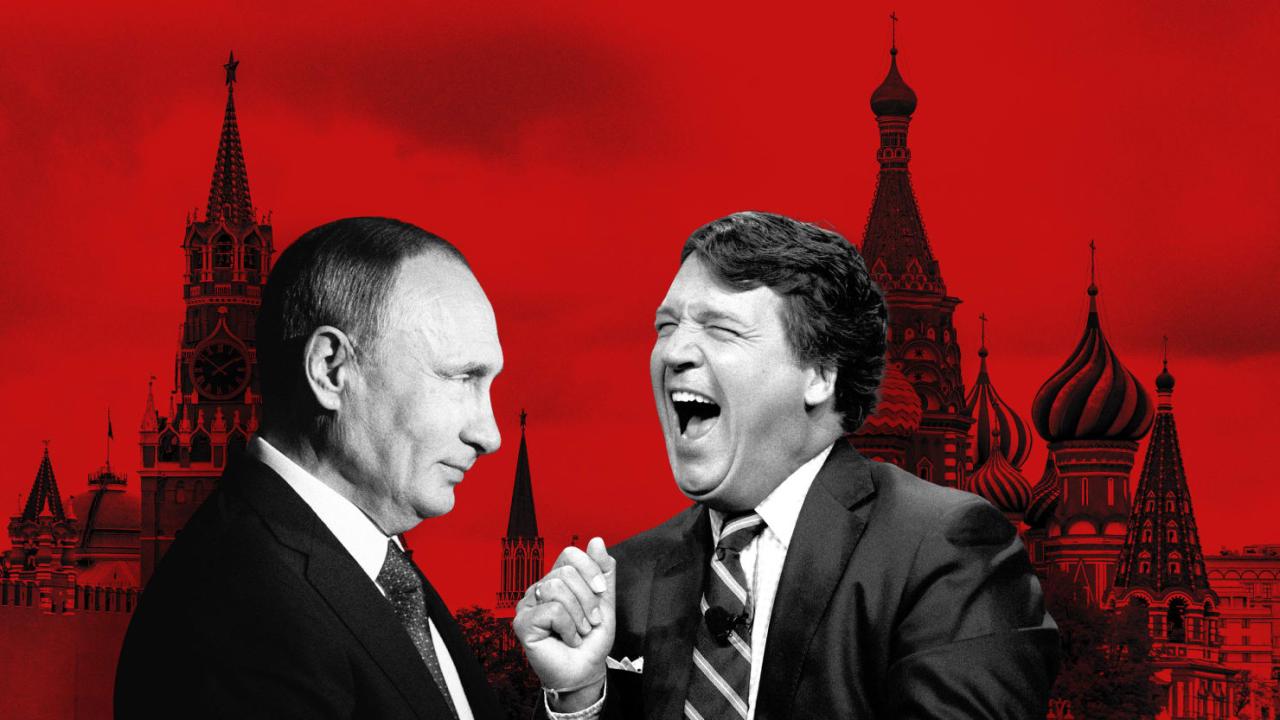
In conclusion, the Tucker Carlson Putin interview ignited a firestorm of discussion and debate. The exchange, characterized by a unique blend of direct questioning and nuanced responses, offers a compelling insight into the perspectives of two prominent figures on the world stage. The interview’s impact, both immediate and long-term, warrants careful consideration within the broader geopolitical landscape.
FAQ Resource
What was the overall tone of the interview?
The tone of the interview was a mix of direct questioning from Carlson and measured responses from Putin. It wasn’t confrontational but certainly didn’t shy away from potentially sensitive topics.
How did other media outlets react to the interview?
Reactions varied across different media outlets. Some praised the interview for its directness, while others criticized it for potentially promoting a biased narrative. The analysis of these varied reactions is included in the detailed report.
What were some of the key disagreements between Carlson and Putin?
Identifying the key disagreements requires careful analysis of the interview transcript and a comprehensive understanding of the context. The provided analysis delves into these key disagreements in the appropriate sections.
What were the potential implications of the interview on public opinion?
The potential impact on public opinion is a significant factor to consider. The detailed analysis explores potential changes in public perception and the interview’s influence on policy decisions.